Solo travel interest hit an all-time high in 2026, and Japan quietly beats every other destination for people going it alone — thanks to near-zero crime, ramen shops built for one, and a yen that hasn’t been this traveler-friendly in years. This Japan solo travel guide breaks down exactly what a trip costs in 2026, why solo dining here feels effortless, and the tested 17-day itinerary that takes you from Tokyo to Osaka without the guesswork. If you’ve been waiting for the right time to go alone, this is it.
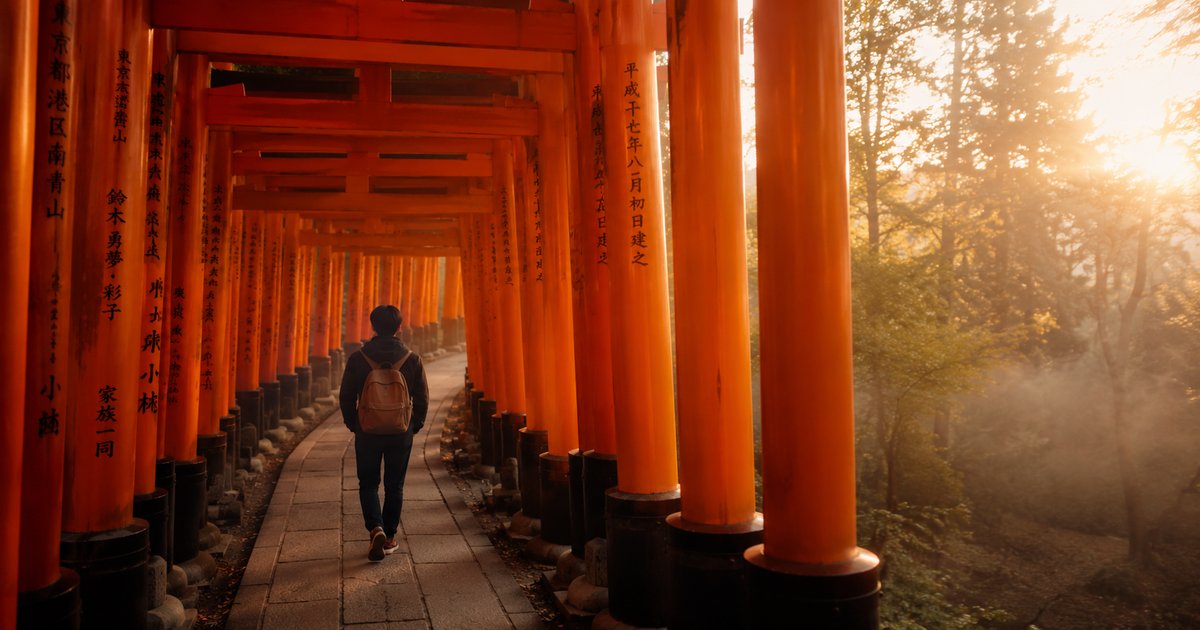
Search interest in solo travel hit an all-time high in 2026, and Japan consistently ranks as the world’s best destination for independent travelers. Low crime, punctual trains, solo-friendly restaurants, and a culture that respects privacy make Japan uniquely welcoming for people traveling alone. With the yen at historically favorable exchange rates for most foreign currencies, 2026 is one of the most affordable times in years to visit.
PR / TRIP PLANNING
Plan the paid parts only after the route is clear
Before booking hotels, tickets, or transport, compare a few options and keep the cancellation rules visible. It helps avoid paying twice later.
Before you pack for Japan: this guide pairs well with the new first-time visitor packing checklist.
Read the Japan Packing List 2026 before buying shoes, power banks, eSIMs, luggage accessories or summer travel gear.
Why Japan is Perfect for Solo Travel
- Safety: Japan ranks among the safest countries in the world. Violent crime is extremely rare and petty theft almost unheard of. Leaving a bag unattended at a cafe while going to the bathroom is genuinely normal.
- Solo dining culture: Japan has solved solo dining. Ramen shops have private counter cubicles, conveyor belt sushi is designed for one, and ichiran-style solo eating is not just accepted but standard. Look for signs reading hitori-sama (one person welcome).
- Transport: Trains and buses run to the minute. IC cards like Suica and PASMO work on almost every train and bus in the country, and even in convenience stores. You never need to speak to buy a ticket.
- English signage: Major train stations, airports, tourist sites, and convenience stores have English throughout. Getting seriously lost is difficult.
Budget Breakdown for 2026
Japan is significantly more affordable in 2026 than it was five years ago due to exchange rate shifts. Here’s a realistic daily budget breakdown:
- Budget traveler (8,000 to 12,000 yen per day): hostel dorm bed 3,500 to 5,000 yen, three convenience store meals 3,000 to 4,500 yen, local transport 2,000 to 3,000 yen
- Mid-range traveler (15,000 to 25,000 yen per day): private hotel room, sit-down restaurant meals, day trips
- Comfortable traveler (30,000 yen and above per day): ryokan stays with dinner and breakfast included, occasional taxis, premium experiences
Money tip: Skip the expensive national JR Pass for most trips. The Hokuriku Arch Pass (24,500 yen) covers Tokyo to Kyoto via Kanazawa with bullet train access and is far better value for a classic route.
The Classic Solo Itinerary (17 Days)
Tokyo (4 nights)
Start in the capital. Spend time in Shinjuku, Shibuya, Harajuku, Akihabara, and Asakusa. Day trip to Nikko or Kamakura. Tokyo’s scale is overwhelming at first but the city is surprisingly navigable once you understand the train map.
Hakone (1 night)
One hour from Tokyo by train. Views of Mount Fuji reflected in Lake Ashi on clear days. The Hakone Free Pass covers buses, trains, the ropeway, and the lake ferry. Stay in an onsen ryokan for the full experience.
Kanazawa (2 nights)
Often called “Little Kyoto” but less crowded and arguably more authentic. Kenroku-en Garden (one of Japan’s top three gardens), the preserved samurai and geisha districts of Higashi-Chaya, and the Omicho seafood market make this a highlight of the trip.
Takayama (1 night)
A beautifully preserved Edo-period merchant town in the Japan Alps. Sanmachi Suji street of sake breweries and craft shops, Jinya government house, and morning markets. One of the most atmospheric small cities in Japan.
Kyoto (3 nights)
The spiritual heart of Japan. Fushimi Inari shrine (go at dawn before the crowds), Arashiyama bamboo grove, Kinkaku-ji Golden Pavilion, Nishiki Market, and the preserved geisha district of Gion. Kyoto rewards slow exploration more than any city in Japan.
Hiroshima and Miyajima (2 nights)
The Peace Memorial Park and Museum are among the most moving experiences in Japan. The day trip to Miyajima Island with its floating torii gate and wild deer is essential. The local specialty oysters are outstanding.
Osaka (3 nights)
Japan’s food capital and the most extroverted city in the country. Dotonbori neon district, Kuromon Ichiba market, Osaka Castle, and Shinsekai. Day trips to Nara (free-roaming deer, Todai-ji Temple) and Kobe are easy from here.
Solo Travel Tips for Japan
- Get a SIM card or pocket wifi at the airport immediately on arrival. Navigating Japan without internet access is unnecessarily difficult.
- Download Google Maps offline for your destinations before you need them. Also download the Japan Official Travel App.
- Stay in hostels for socializing or business hotels for privacy. Capsule hotels are uniquely Japanese and well worth trying for at least one night.
- Convenience stores are your friend. 7-Eleven, Lawson, and FamilyMart sell excellent food, have ATMs that accept foreign cards, and are open 24 hours.
- Cash still matters. Many smaller restaurants, temples, and rural businesses are cash-only. Keep 10,000 to 20,000 yen on hand at all times.
- Learn a few Japanese phrases. Sumimasen (excuse me), arigatou gozaimasu (thank you very much), and eigo wa hanasemasu ka (do you speak English?) will take you far.
Best Time to Visit Japan
- Spring (late March to early May): Cherry blossom season is the most popular time in Japan. Book accommodation months in advance.
- Autumn (October to November): Fall foliage is as spectacular as cherry blossoms and less crowded. Arguably the best season.
- Summer (June to August): Hot and humid, but festivals are everywhere. The Gion Matsuri in Kyoto (July) is one of Japan’s greatest festivals.
- Winter (December to February): Cold but magical in snow country. Fewer tourists, cheaper accommodation, and stunning winter landscapes.
Final Thoughts
Japan is the world’s great solo travel destination. Safe, welcoming, endlessly fascinating, and perfectly set up for independent exploration. Whether you’re a first-time solo traveler or a veteran, Japan will exceed your expectations. Go in 2026 while the exchange rate makes it as affordable as it’s been in years.
How This Guide Was Reviewed
This article was reviewed on July 26, 2026 to reduce generic travel advice and make the page more useful before booking. Prices, opening rules, ticket windows, transport details, and affiliate availability can change, so verify official sources before final plans.
