A wild, boat-only crescent on Kefalonia just beat thousands of contenders to be crowned Europe’s best beach for 2026 — and it’s only the beginning. If you’re planning a trip to the best Greek islands beaches in 2026, this guide reveals which shores are worth the boat rides and steep hikes, what they actually cost, and when to visit before the crowds arrive. From volcanic black sand in Santorini to pink lagoons in Crete, here are the beaches that define Greece right now.
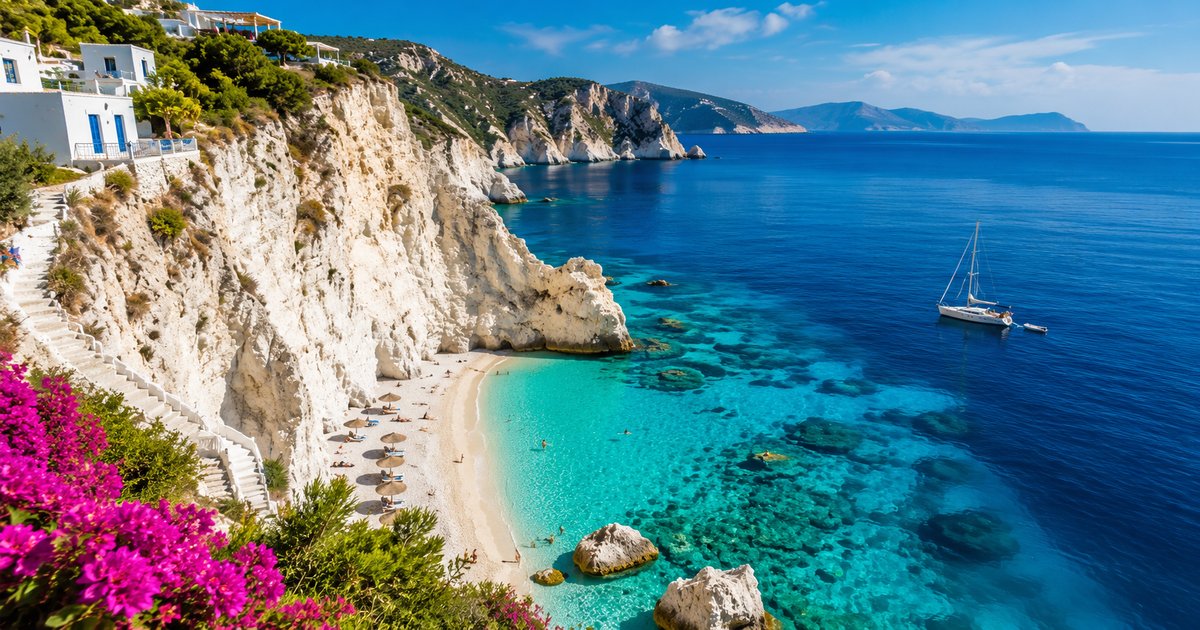
Fteri Beach in Greece has been named the best beach in Europe for 2026. But Greece’s coastline is so extraordinary that choosing just one beach feels almost impossible. Over 16,000 kilometers of coastline across thousands of islands produce an almost infinite variety of beach experiences: dramatic volcanic black sand, hidden coves of white marble pebbles, turquoise lagoons sheltered by limestone cliffs, and endless Aegean blue. Here are the beaches that define Greece in 2026.
PR / TRIP PLANNING
Pack the small things before a beach trip
A beach itinerary is more enjoyable when the basics are handled early: adapter, phone charging, waterproof storage, and a light day bag.
Fteri Beach, Kefalonia: Europe’s Best Beach 2026
Located on the western coast of Kefalonia, Fteri Beach is a wild, spectacular crescent of pure white pebbles and deep turquoise water accessible only by boat or a challenging hike down steep cliffs. There are no facilities, no vendors, and no road access. Just extraordinary water clarity, dramatic rock walls, and one of the most pristine beach experiences in the Mediterranean. Boat trips from nearby Lixouri and Argostoli run daily in summer.
Best for: Wild, unspoiled beauty. Bring everything you need as there is nothing at the beach itself.
Navagio Beach, Zakynthos: The Shipwreck Beach
Perhaps the most photographed beach in Greece, Navagio (Shipwreck Beach) is only accessible by boat. A rusting freighter sits in the middle of a white sand beach enclosed by towering vertical white limestone cliffs. The water is an almost impossibly vivid turquoise. Every image you have seen does not fully prepare you for the scale and drama of the real thing.
Access: Boat trips from Porto Vromi on the west coast of Zakynthos (15 minutes) or from Zakynthos Town (45 minutes).
Balos Lagoon, Crete: Pink Sand and Caribbean Colors
At the northwestern tip of Crete, a long sandy spit curves around a shallow lagoon of extraordinary color. The shallow water shifts from pale pink and white near the sandy bottom to vivid turquoise and deep blue at the channel edge. Pink flamingos occasionally wade in the lagoon in spring. The approach by boat from Kissamos is dramatic, with the lagoon revealed suddenly around the final headland.
Access: Boat from Kissamos Port (45 minutes) or 4km walk down from the cliffside parking area. The walk is steep but the views are extraordinary.
Red Beach, Santorini: Volcanic Drama
Santorini’s volcanic origin produces beach scenery found nowhere else in the Mediterranean. Red Beach near Akrotiri sits beneath towering cliffs of deep red and black volcanic rock, with dark reddish sand and vivid blue water below. The contrast of colors is completely unlike any other beach in Greece. Visit in the morning before the boats arrive from Fira and Oia.
Access: Short walk from Akrotiri village on the southern tip of Santorini.
Myrtos Beach, Kefalonia: The Classic View
The view of Myrtos Beach from the clifftop road above is one of the most famous in Greece: a long crescent of brilliant white pebbles curving between tall green cliffs, with water so blue it seems almost artificial. The beach itself is stunning but the clifftop viewpoint is where most photographs are taken. Combine a visit with the nearby Melissani Cave, an underground lake in a collapsed cave open to the sky.
Best time: Midday when the sun is overhead and the water color is at its most intense.
Elafonissi Beach, Crete: Pink Sand Lagoon
A shallow tidal lagoon connects the southwestern Cretan coast to a small island, creating a natural wading experience across water rarely more than knee-deep. The sand has a distinctive pinkish tint from crushed coral and shell fragments. The water is warm, clear, and extremely calm in the lagoon. One of the best family beaches in the Mediterranean.
Access: 75km west of Chania. Accessible by bus from Chania or rental car.
Sarakiniko Beach, Milos: The Moon Landscape
Milos is the most geologically dramatic island in the Cyclades, and Sarakiniko Beach showcases its extraordinary volcanic landscape most spectacularly. The beach is not sand but a lunar landscape of smooth white volcanic rock carved by wind and sea into curves, arches, and hollows above a narrow channel of vivid blue water. Diving from the white rocks into the blue water below has become one of the defining images of Greek island travel.
Access: 5km north of Adamas port by rental bike, scooter, or car.
Kleftiko, Milos: Sea Caves by Boat
Also on Milos, Kleftiko is only accessible by sea. A group of white volcanic rock formations creates a network of sea caves, arches, and hidden coves with crystal-clear water in blues and greens. Boat tours from Adamas anchor here for swimming and snorkeling. Pirates historically used the caves as a hideout, which is how the site got its name.
Porto Katsiki, Lefkada: White Cliffs and Turquoise Sea
A long staircase descends the tall white cliffs to a narrow beach of white pebbles and extraordinarily clear water. The setting is dramatic and the water is among the clearest in the Ionian Sea. Lefkada is connected to the Greek mainland by a bridge, making it the only Greek island accessible by car without a ferry.
Practical Tips for Greek Beach Travel in 2026
- Best time to visit: Late June and September offer warm water, full sun, and significantly fewer crowds than peak July and August. Prices drop and the most popular beaches become manageable.
- Island hopping: Greek ferries connect the islands efficiently. Book tickets 2 to 3 days in advance in summer to secure space, especially for vehicles.
- Water shoes: Many of Greece’s best beaches are pebble rather than sand. Water shoes or reef shoes make entry comfortable.
- Sun protection: The Greek summer sun is intense. Factor 50 sunscreen, a hat, and shade during the midday hours (noon to 3pm) are essential.
- Getting to remote beaches: Many of the best beaches require boat access or a significant walk. Water taxis and day-trip boats are widely available at most island ports.
Final Thoughts
Greece in 2026 offers a beach experience that no other country in Europe matches for variety and drama. From the volcanic black sands of Santorini to the pink marble pebbles of Kefalonia, from hidden sea caves accessible only by boat to vast shallow lagoons for family wading, Greece has a beach for every kind of traveler. Fteri Beach may be Europe’s best, but the competition across these islands is extraordinary.
How This Guide Was Reviewed
This article was reviewed on July 26, 2026 to reduce generic travel advice and make the page more useful before booking. Prices, opening rules, ticket windows, transport details, and affiliate availability can change, so verify official sources before final plans.
