Most visitors crowd the same handful of sandy strips, but the best Algarve beaches in 2026 are the amber-cliff coves you can only reach by kayak, swimming tunnel, or a steep hidden staircase. Portugal’s southern coast pairs genuinely warm Atlantic water with cinematic rock stacks and glowing sea caves that still feel wild despite decades of tourism. This guide breaks down where to go, what it really costs, and the best time to visit before the summer crush arrives.
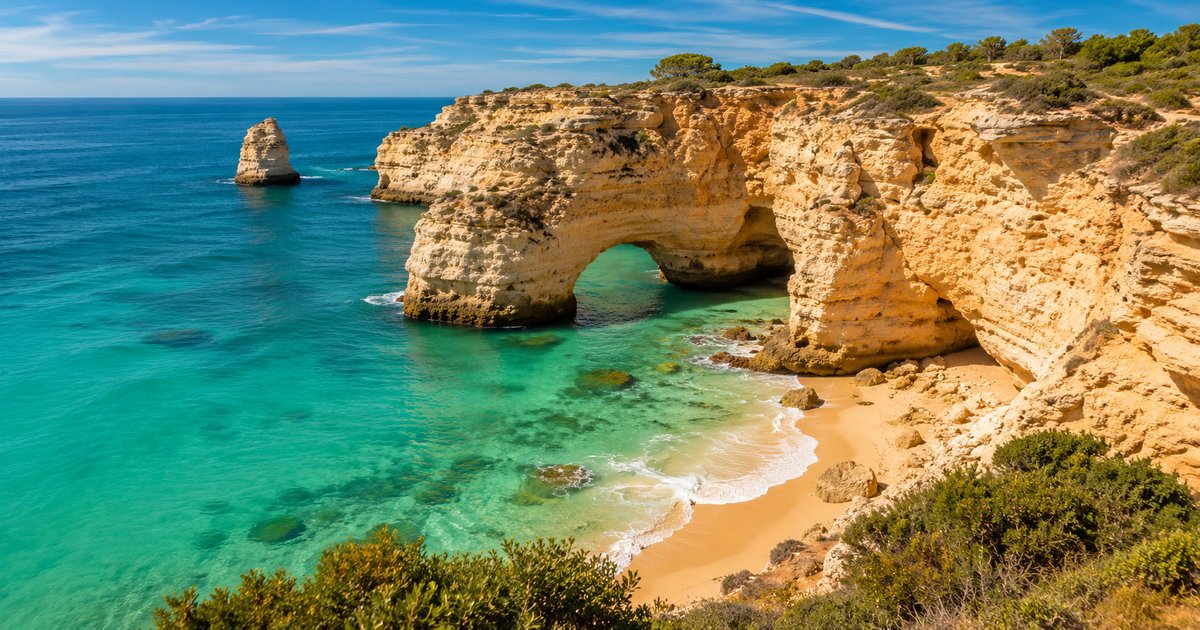
The Algarve, Portugal’s southernmost region, offers something no other European coastline quite manages: dramatic amber and ochre limestone cliff scenery combined with genuinely warm Atlantic water, uncrowded coves accessible only by kayak or swimming tunnel, and a laid-back fishing culture that has survived decades of tourism with its character largely intact. In 2026 it remains one of Europe’s finest coastal destinations, particularly for travelers seeking beauty without extreme crowds.
PR / TRIP PLANNING
Pack the small things before a beach trip
A beach itinerary is more enjoyable when the basics are handled early: adapter, phone charging, waterproof storage, and a light day bag.
Why the Algarve Stands Out in 2026
The Algarve does something remarkable among European beach destinations. The cliff scenery is genuinely cinematic. Rock stacks rise from the sea at improbable angles. Hidden grottos and sea caves glow green in the midday light. The water is warm enough by June and hot in July and August. Prices remain reasonable compared to the French Riviera or Greek islands. And the food is exceptional.
Late June and early September are now widely recommended over peak August. The sea is warm, the sun is consistent, and the most famous beaches are actually enjoyable rather than impossibly crowded.
Top Beaches of the Algarve
Praia da Marinha: The Postcard Beach
The single most photographed beach in the Algarve and one of the most beautiful in Europe. Praia da Marinha sits between towering amber limestone rock formations with multiple sea stacks, arches, and grottos accessible by swimming. The water is crystal clear and sheltered. The clifftop walk above the beach offers extraordinary views in both directions.
Access: Cliff-top car park near Lagoa, with a steep staircase down to the beach.
Praia do Camilo, Lagos
A small, enclosed cove reached by a long wooden staircase down the orange cliffs. The limestone formations here are particularly dramatic, with tunnels and arches that can be explored on foot at low tide. Swimming through the natural rock tunnel to the adjacent cove is a highlight for many visitors.
Benagil Cave: The Cathedral Grotto
Benagil is not a beach in the traditional sense but one of the most extraordinary coastal features in Europe. A sea cave with a collapsed roof creates a natural skylight over a small sandy beach inside the cave. The interior glows gold and blue with filtered sunlight. Access is by swimming from Benagil Beach, kayak, or paddleboard. Organized boat tours stop at the entrance but cannot enter. The 10-minute swim from the beach is manageable for confident swimmers in calm conditions.
Praia de Odeceixe: Where River Meets Sea
At the western end of the Algarve where the coast turns north toward Alentejo, Odeceixe Beach sits where a small river meets the Atlantic. The result is a perfect family beach with calm river water on one side and Atlantic waves on the other. Surrounded by the Vicentine Coast Natural Park, the scenery here is wilder and less developed than the central Algarve.
Ilha Deserta, Faro: Unspoiled Island Beach
A long, narrow barrier island accessible only by ferry from Faro. The eastern Algarve’s character is completely different from the west: flat, sandy, and backed by the Ria Formosa lagoon rather than cliffs. Ilha Deserta has a single restaurant and kilometers of empty Atlantic beach. A genuinely remote experience within easy reach of Faro Airport.
Top Towns and Villages
Lagos
The most popular base for exploring the western Algarve’s dramatic cliff scenery. The old town has well-preserved historic architecture, excellent restaurants, and a lively atmosphere that works well for both families and solo travelers. Ponta da Piedade, a headland of extraordinary rock formations just south of the town, is the Algarve’s single most spectacular viewpoint.
Tavira
Often called the most beautiful town in the Algarve. The eastern Algarve’s character is quieter, more historic, and less developed than the west. Tavira has a medieval castle, Roman bridge, and 21 churches for a town of 25,000 people. The ferry to Ilha de Tavira (a barrier island with excellent beaches) leaves from the town quay.
Sagres and Cabo de Sao Vicente
The southwestern tip of Portugal and historically the southwestern tip of the known European world. Cabo de Sao Vicente is where Prince Henry the Navigator established his school of navigation in the 15th century, launching the Age of Exploration. The lighthouse on the dramatic clifftop headland marks the end of continental Europe. The sunsets here are legendary.
Food and Drink
The Algarve’s food scene is genuinely outstanding and significantly underrated. The region produces Portugal’s finest seafood alongside its best almonds, figs, and oranges.
- Cataplana de Mariscos: The Algarve’s signature dish, a copper clam-shaped pot filled with clams, prawns, and fish in a fragrant tomato and coriander broth
- Grilled Sardines: At their finest in summer, chargrilled over charcoal and eaten with a simple tomato salad
- Percebes: Gooseneck barnacles harvested from the rocky Atlantic coast, a prized and expensive delicacy with a flavor somewhere between lobster and oyster
- Medronho: A powerful local brandy made from arbutus berries, the unofficial spirit of the Algarve interior
Getting There and Around
Faro Airport (FAO) receives direct flights from London, Amsterdam, Manchester, Lisbon, and many other European cities. The airport is just 15 minutes from the center of Faro. A rental car is essentially required for exploring the western Algarve’s cliff beaches and villages independently. Public buses connect the main towns but do not reach most of the best beaches.
Best Time to Visit
- June: Sea temperature rising, far fewer crowds than summer peak, full sunshine
- July to August: Peak season with hot weather and warm sea. Book accommodation months ahead for the western Algarve
- September: Arguably the best month. Sea at its warmest, crowds thinning, prices dropping, weather still excellent
- October: Warm enough for beach days, very quiet, and dramatically cheaper. Good for walking and exploring the interior
Final Thoughts
The Algarve in 2026 remains one of Europe’s great travel bargains. The cliff scenery is among the most dramatic on the continent. The beaches are genuinely beautiful. The food is excellent and good value. And outside the peak July and August weeks, the region is entirely manageable. September visitors in particular often report it as their favourite travel experience in Europe. Come for the cliffs, stay for the cataplana.
How This Guide Was Reviewed
This article was reviewed on July 26, 2026 to reduce generic travel advice and make the page more useful before booking. Prices, opening rules, ticket windows, transport details, and affiliate availability can change, so verify official sources before final plans.
