If you searched for the Tokyo Subway Ticket before your trip and found a price of 800 yen, that page is out of date. On March 14, 2026, Tokyo Metro and Toei Subway raised the price of every tourist pass they sell, and JR East raised its train fares on the same day for the first time since 1987. Almost every English guide to this question still runs the old numbers, so the advice they give is wrong.
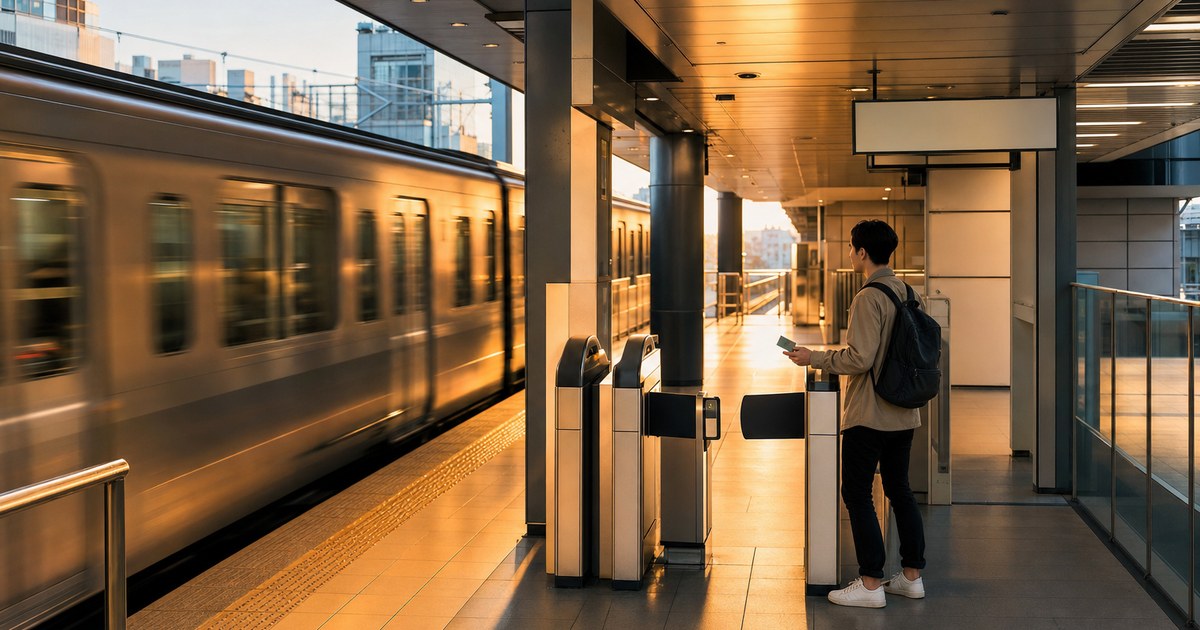
This guide rebuilds the math from the operator price tables as they stand now, so you can decide in about two minutes whether to buy the pass or just tap a Suica.
What actually changed on March 14, 2026
Two separate fare revisions landed on the same day, and together they changed the answer for most travelers.
| Ticket | Old price | Price now | Change |
|---|---|---|---|
| Tokyo Subway Ticket, 24 hours | 800 yen | 1,000 yen | plus 200 yen |
| Tokyo Subway Ticket, 48 hours | 1,200 yen | 1,500 yen | plus 300 yen |
| Tokyo Subway Ticket, 72 hours | 1,500 yen | 2,000 yen | plus 500 yen |
| Tokyo Metro and Toei Common One-Day Pass | 900 yen | 1,100 yen | plus 200 yen |
| Tokyo Free Ticket | 1,600 yen | 1,720 yen | plus 120 yen |
The 72-hour pass took the hardest hit, rising by a third in a single step. At the same time JR East lifted its base fare from 150 yen to 160 yen for paper tickets and 155 yen on an IC card, an average rise of 7.8 percent, and scrapped the discounted fare zones that used to make short hops inside central Tokyo unusually cheap. So the pass got more expensive, but so did the alternative.
One genuine improvement came with the price rise: since 10:00 on March 25, 2026, these tickets can be used by QR code, so you are no longer tied to a paper ticket that you have to keep flat and unbent for three days.
Current prices at a glance
| Pass | Adult | Child, ages 6 to 11 |
|---|---|---|
| 24 hours | 1,000 yen | 500 yen |
| 48 hours | 1,500 yen | 750 yen |
| 72 hours | 2,000 yen | 1,000 yen |
The clock starts when you first pass through a ticket gate, not when you buy the ticket. That matters more than it sounds. A 48-hour pass first used at 14:00 on a Monday is alive until 14:00 on Wednesday, which is very often two and a half usable sightseeing days rather than two.
What a single ride costs now
Here is the current Tokyo Metro fare table. Fares include the 10 yen station accessibility surcharge, and IC card fares are charged to the single yen, which is why they sit slightly below the paper price.
| Distance | Paper ticket | IC card |
|---|---|---|
| 1 km to 6 km | 180 yen | 178 yen |
| 7 km to 11 km | 210 yen | 209 yen |
| 12 km to 19 km | 260 yen | 252 yen |
| 20 km to 27 km | 300 yen | 293 yen |
| 28 km to 40 km | 330 yen | 324 yen |
Toei Subway works the same way but runs a little higher on longer trips. And here is the detail that decides the whole question for many visitors: Tokyo Metro and Toei Subway are two different companies. A journey that starts on a Metro line and finishes on a Toei line charges you two base fares, with only a 70 yen transfer discount applied when you tap through a designated transfer gate within the posted time limit. One journey, close to double the fare.
The break-even math
Tokyo Metro states that the pass will definitely save you money at six rides in 24 hours for the 24-hour ticket, five rides in each 24 hours for the 48-hour ticket, and four rides in each 24 hours for the 72-hour ticket. Those figures are calculated at the cheapest possible fare, so they are deliberately conservative. Real sightseeing days rarely consist of minimum-fare hops.
Below is the number of rides you need before each pass pays for itself, worked out at three realistic fare levels.
| Your typical ride | 24-hour pass | 48-hour pass | 72-hour pass |
|---|---|---|---|
| 178 yen, short hops only | 6 rides | 9 rides total, about 4 to 5 per day | 12 rides total, 4 per day |
| 210 yen, a normal mix | 5 rides | 8 rides total, 4 per day | 10 rides total, about 3 per day |
| 290 yen, longer rides or Metro to Toei transfers | 4 rides | 6 rides total, 3 per day | 7 rides total, about 2 to 3 per day |
The pattern is clear. The longer the pass, the easier it is to justify, because the 72-hour ticket costs only twice the 24-hour ticket while giving you three times the time. If your days involve crossing between Metro and Toei lines, the 72-hour pass pays for itself at roughly two to three rides a day, which is a very low bar for anyone actually sightseeing.
Where the pass quietly loses
This is the part most comparisons skip, and it is the reason some travelers buy the pass and lose money.
The Tokyo Subway Ticket covers Tokyo Metro and Toei Subway. That is all. It does not cover:
- The JR Yamanote Line, the green loop that connects Tokyo Station, Shinjuku, Shibuya, Harajuku, Ikebukuro and Ueno
- Any other JR line, including the Chuo and Sobu lines
- Private railways such as Keio, Odakyu, Tokyu, Seibu and Tobu
- The Yurikamome line to Odaiba, and the Tokyo Monorail to Haneda
Look honestly at your itinerary. A first trip built around Shibuya, Harajuku, Shinjuku and Ikebukuro is a Yamanote Line trip, and you will keep paying JR fares on top of the pass you already bought. A trip built around Asakusa, Ueno, Ginza, Roppongi, Tsukiji, Toyosu, Akihabara and the Imperial Palace is almost entirely a subway trip, and the pass is excellent. Most people fall clearly into one camp or the other once they list their days out.
Who is allowed to buy it
A lot of English pages state that the Tokyo Subway Ticket is for foreign tourists only. That is not quite right, and the difference matters if you live in Japan.
Tokyo Metro sells it to overseas visitors and to domestic travelers who live outside Tokyo, Kanagawa, Saitama, Chiba, Ibaraki, Tochigi, Gunma and Yamanashi. So a resident of Osaka or Fukuoka visiting Tokyo can buy one. A resident of Yokohama cannot. If you are buying in Japan on a short-stay visa, your passport is checked at the point of sale, so carry it rather than a copy.
Suica in 2026: which card should you actually get
If the pass does not suit your itinerary, an IC card is the default, and the choices are no longer the confusing mess they were during the chip shortage of 2023 to early 2025.
| Option | Deposit | Expiry | Best for |
|---|---|---|---|
| Welcome Suica | None | 28 days from first use, balance not refundable | Short trips where you will spend the balance anyway |
| Regular Suica | 500 yen | No short expiry, balance refundable | Longer stays, or anyone who expects to return to Japan |
| Mobile Suica on a phone | None | Tied to your device, not a card | Almost everyone, if your phone supports it |
Sales of unregistered Suica and PASMO cards were fully restored on March 1, 2025, so the physical card is easy to get again at JR East ticket machines. The Welcome Suica is still handy at the airport, but read that 28-day expiry carefully. Any money left on it on day 28 is gone, and unlike a regular Suica it cannot be refunded.
For most travelers with a compatible phone, Mobile Suica is the cleanest answer in 2026. There is nothing to buy, nothing to return, and you can top it up from your seat on the train instead of queueing at a machine.
The verdict
Three simple rules cover almost every case.
- Buy the 72-hour pass if you have three or more days in Tokyo and your plans lean toward the eastern and central districts served by the subway. At 2,000 yen it needs only about three rides a day to win, and it still wins after the price rise.
- Skip the pass and use Suica if your days revolve around the Yamanote Line loop, if you are in Tokyo for one or two days with a light schedule, or if you are taking a lot of taxis. Under roughly four subway rides a day, the pass stops making sense.
- Ignore the 24-hour pass unless you have exactly one dense subway-heavy day. At 1,000 yen it is the worst value of the three, because the 72-hour version costs only twice as much for three times the time.
And regardless of which you choose, carry an IC card anyway. The pass does not work on JR lines, buses, convenience stores or vending machines, and a Suica does all four.
Common questions
Does the 24-hour pass mean one calendar day?
No. It runs for a full 24 hours from the moment you first pass through a gate, which is why a mid-afternoon start can stretch a pass across parts of two days.
Can I use the pass to get from the airport into the city?
Not on its own, because the airport lines are not subway lines. Both operators sell combination sets that pair airport transport with the pass, and buying that set is usually cheaper than buying the two separately.
Is it still worth buying after the price rise?
For a subway-heavy three-day trip, yes. The pass rose by 500 yen, but JR fares rose too and the old central Tokyo discount zones were abolished, so the alternative got more expensive as well. What changed is that lazy sightseeing days no longer break even.
Can two people share one pass?
No. It is one ticket per person and it stays in the gate system as a single traveler. Children aged 6 to 11 have their own half-price version, and children under 6 travel free with a paying adult.
Bottom line
The Tokyo Subway Ticket is still one of the better transport deals in Japan, but the March 2026 price rise moved the threshold. Count the subway rides in your actual plan, check whether the Yamanote Line is doing the heavy lifting, and pick on that basis rather than on a price you read on a page written two years ago.
All prices in this guide are taken from the Tokyo Metro and JR East fare tables as published for 2026. Fares in Japan are revised occasionally, so confirm at the ticket machine if you are reading this well after publication.
PR
Plan This Trip With Fewer Last-Minute Costs
Hotel prices around Tokyo can change quickly. Compare stays early, then check the travel gear checklist before you pack.
Sources Checked and Editorial Note
This article was reviewed on July 26, 2026 for AdSense quality, source clarity, and reader usefulness. The fare comparison should be rechecked before purchase because rail prices and pass rules can change.
- Tokyo Metro official Tokyo Subway Ticket page
- Toei Transportation official ticket page
- GO TOKYO official IC card and ticket guide
How This Guide Was Reviewed
This article was reviewed on July 26, 2026 with official-source checking as the priority. Rules, prices, ticket windows, and transport details can change, so confirm the official page before relying on the final details.
