Tokyo hotel advice gets confusing because the city is not built around one center. Shinjuku, Ginza, Tokyo Station, Ueno, Asakusa, and Shibuya can all be right, depending on your first two days.
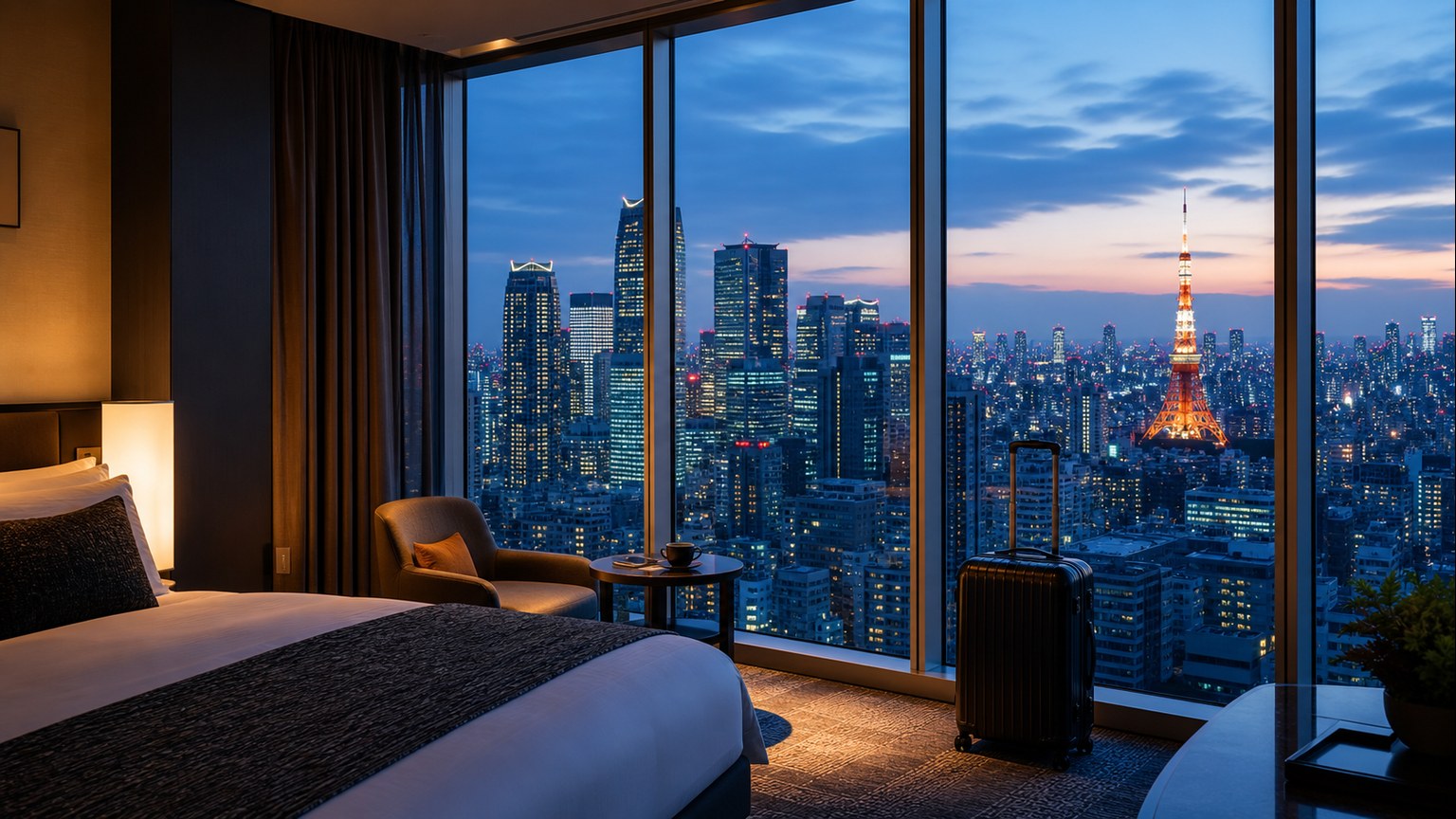
This 2026 guide is written for first-time visitors who want fewer train mistakes, easier airport transfers, and a hotel area that fits their actual itinerary.
BEFORE YOU BOOK
Before you pack for Japan: this guide pairs well with the new first-time visitor packing checklist.
Read the Japan Packing List 2026 before buying shoes, power banks, eSIMs, luggage accessories or summer travel gear.
Tokyo Hotel Booking Checklist Before You Reserve Activities
If you plan to book fixed-date activities, choose your hotel area before buying nonrefundable tickets. A cheaper room can become expensive if it creates early taxis, missed time slots, or long transfers.
- Put fixed tickets first: teamLab, USJ, SHIBUYA SKY, and Ghibli Museum can shape the best hotel area.
- Check first and last train timing: late arrivals, early airport runs, and theme park days need extra margin.
- Choose cancellation flexibility: flexible hotel rules help if ticket dates or weather plans change.
- Map the exact station exit: a hotel near the station can still be inconvenient if the exit is wrong.
- Keep one light day: do not stack a long train day, a timed ticket, and a late hotel transfer on the same day.
Next step: use the Japan activity booking guide, the Japan eSIM guide, and the travel gear checklist before locking the rest of your route.
PR / AFFILIATE LINKS
Before locking your Tokyo route, compare hotel and package prices on more than one booking site. Always check the final price, cancellation rules, and language support before paying.
Quick Answer
- Best all-rounder: Shinjuku, if you want nightlife, food, and many train lines.
- Best for comfort: Ginza or Tokyo Station, if you want cleaner logistics and easier Shinkansen access.
- Best value: Ueno or Asakusa, if you want lower prices and old Tokyo atmosphere.
- Best for youth culture: Shibuya, if shopping, music, and late nights matter.
1. Shinjuku: Best First-Time Base for Energy
Shinjuku works because it keeps many Tokyo experiences close: restaurants, department stores, nightlife, parks, and train lines. The downside is station complexity. A hotel that looks close on a map can still be tiring if it is on the wrong side of the station.
Choose Shinjuku if you want Tokyo to feel big and energetic from the first night. Skip it if you hate crowds or arrive late with heavy luggage.
2. Ginza and Tokyo Station: Best for Smooth Logistics
Ginza and Tokyo Station are less chaotic than Shinjuku and often better for travelers who care about clean transfers, taxis, restaurants, and Shinkansen access. This area is especially good if your trip includes Kyoto, Osaka, or a day trip by bullet train.
The trade-off is price. Hotels can be more expensive, and the area feels polished rather than local.
3. Ueno and Asakusa: Best Value for First-Timers
Ueno and Asakusa are strong choices if you want easier access to museums, old neighborhoods, budget hotels, and a slightly slower pace. They also work well for Narita Airport access.
Choose this area if you want value and classic Tokyo atmosphere. Skip it if most of your nights will be in Shibuya, Shinjuku, or Roppongi.
4. Shibuya: Best for Shopping and Night Energy
Shibuya is convenient for Harajuku, Omotesando, Daikanyama, and nightlife. It is a good fit for younger travelers and anyone who wants Tokyo to feel visual and fast.
The downside is crowd fatigue. If you want quiet nights or easy luggage movement, another area may feel better.
My Rule for Choosing
Do not choose the cheapest Tokyo hotel until you map your first two days. If your first activities are teamLab, Shibuya Sky, Ghibli Museum, or an early Shinkansen, the best hotel area changes quickly.
Useful Next Reads
- Japan activities to book before your first trip
- Japan travel mistakes first-timers regret
- Japan eSIM vs pocket WiFi
Source and Update Note
Updated on July 26, 2026. Hotel prices, train schedules, and airport access can change, so confirm the final location, station exit, cancellation rule, and arrival route before booking.
How This Guide Was Reviewed
This article was reviewed on July 26, 2026 to reduce one-size-fits-all hotel advice. Treat the area recommendations as a decision guide, then confirm the exact station exit, transfer route, reviews, and cancellation rule before booking.
Official Planning Sources
Use this hotel-area guide as a planning shortcut, then confirm the exact neighborhood, station exit, airport route, and cancellation rule before booking.
