Anime tourism in Japan just exploded by 195% in 2026, and quiet shrines like the stone steps from Your Name now draw fans from all over Asia lining up for a single photo. This anime pilgrimage guide (seichi junrei) maps the real-life locations behind Your Name, Slam Dunk, Weathering With You, and more across Tokyo, Kamakura, and Kyoto. You will learn exactly where to go, when to visit, and how to do it respectfully so you do not become the tourist locals complain about.
Anime tourism in Japan grew by an extraordinary 195% in 2026, making it one of the fastest-growing travel trends in Asia. Fans from South Korea, Taiwan, Hong Kong, the Philippines, and beyond are traveling to Japan specifically to visit the real-life locations featured in their favourite anime. Known as seichi junrei (sacred place pilgrimage), this form of travel has transformed entire neighborhoods and turned quiet shrines into global landmarks.
This guide covers the best pilgrimage spots across Japan, with practical tips for visiting each location respectfully.
PR / TRIP PLANNING
Plan the paid parts only after the route is clear
Before booking hotels, tickets, or transport, compare a few options and keep the cancellation rules visible. It helps avoid paying twice later.
Tokyo Pilgrimage Spots
Suga Shrine (Your Name)
The stone steps leading up to Suga Shrine in Yotsuya are arguably the most famous anime pilgrimage site in the world. In the final act of Makoto Shinkai’s Your Name (Kimi no Na wa), Taki and Mitsuha finally find each other here. Visitors come from across the globe to recreate this scene. The shrine itself is small and peaceful, tucked away from busy streets. Go early in the morning to experience it before the day-trip crowds arrive.
Access: 5-minute walk from Yotsuya Station (JR Chuo Line, Tokyo Metro Marunouchi and Namboku Lines)
Akihabara (Anime Central)
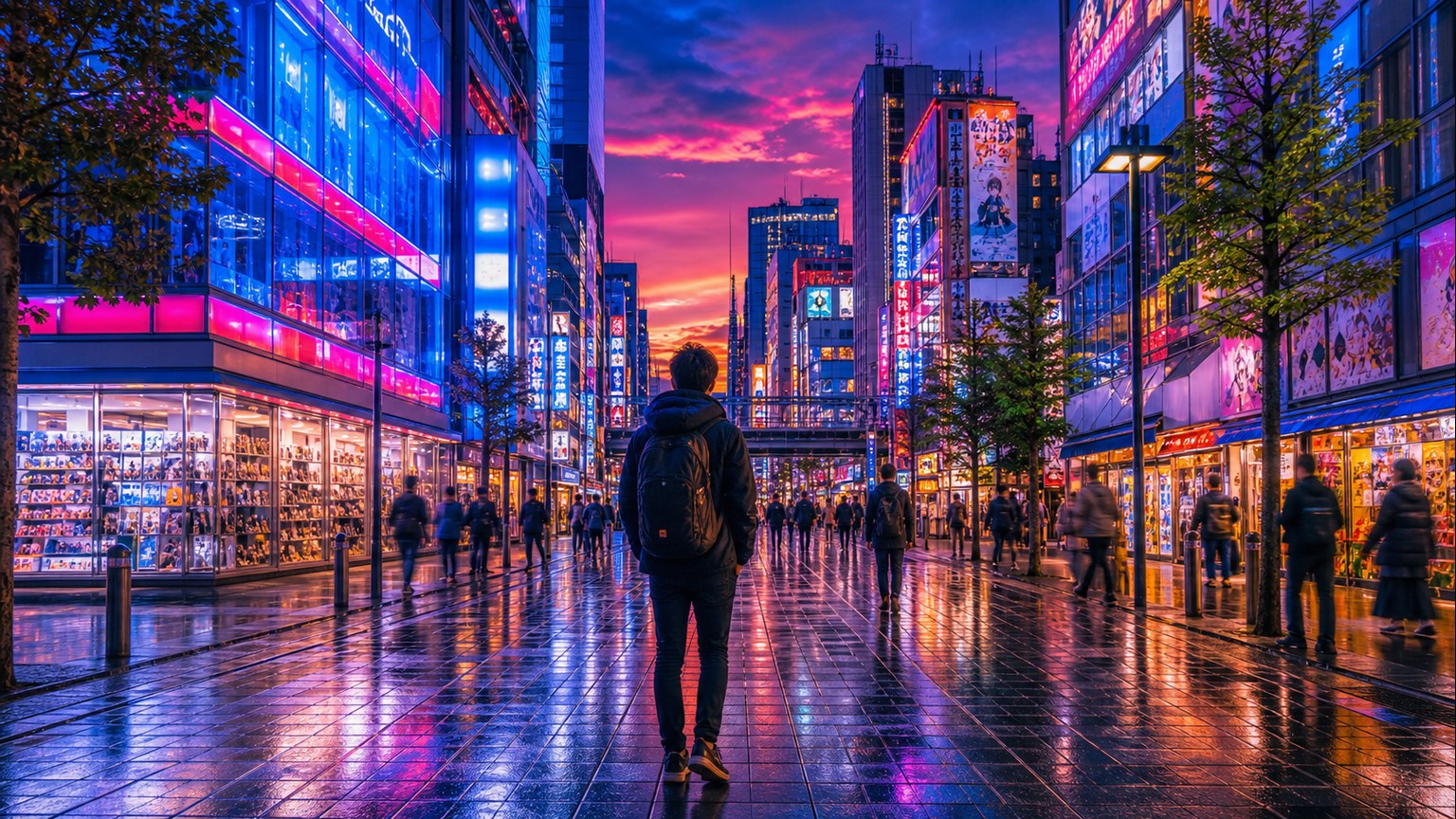
No anime pilgrimage to Japan is complete without time in Akihabara. The electric town district appears as background art in countless anime series and is the spiritual home of otaku culture. Multi-floor electronics shops give way to figure stores, doujinshi (fan comic) retailers, maid cafes, and arcades. Radio Kaikan and Mandarake Complex are essential stops. The atmosphere is unlike anywhere else in the world.
Access: Akihabara Station (JR Yamanote Line, JR Chuo-Sobu Line, Tokyo Metro Hibiya Line)
Shibuya Scramble Crossing (Weathering With You)
The world’s busiest pedestrian crossing appears prominently in Makoto Shinkai’s Weathering With You. Standing in the middle of the Scramble during a crossing is a classic Tokyo experience even outside of its anime significance. The Mag’s Park viewpoint above the crossing gives the aerial perspective seen in the film.
Access: Shibuya Station (JR Yamanote Line, Tokyo Metro, Tokyu Lines)
Washinomiya Shrine, Saitama (Lucky Star)
Washinomiya Shrine in Kuki City, Saitama, is historically one of Japan’s oldest shrines and became one of the first major anime pilgrimage sites after Lucky Star aired in 2007. The shrine’s appearance in the opening sequence drove a 10-fold increase in visitors and helped establish seichi junrei as a recognized tourism phenomenon. Annual New Year visitor numbers still exceed 450,000.
Access: 10-minute walk from Washinomiya Station (Tobu Isesaki Line, 40 minutes from Asakusa)
Kamakura Pilgrimage Spots
Kamakura-Kokomae Railway Crossing (Slam Dunk)
The single most photographed anime pilgrimage spot in Japan in 2026. The level crossing near Kamakura-Kokomae Station, with the Shonan coastline stretching beyond, is the iconic image used in the opening sequence of the Slam Dunk anime. The scene shows the main character running alongside the Enoshima Electric Railway with the ocean behind him. Visitors queue patiently to recreate the shot. Arrive early on weekdays to avoid the longest waits.
Access: Kamakura-Kokomae Station (Enoshima Electric Railway, 55 minutes from Shinjuku via Shonan-Shinjuku Line to Fujisawa)
Kyoto Pilgrimage Spots
Fushimi Inari Shrine (Multiple Anime)
The thousands of vermilion torii gates winding up the forested mountain behind Fushimi Inari appear in dozens of anime series. The iconic tunnel of gates (senbon torii) is one of the most photographed locations in Japan. The full hike to the summit takes 2 to 3 hours and gets progressively quieter as you climb. The gates at dusk and early morning are especially atmospheric.
Access: 5-minute walk from Fushimi Inari Station (JR Nara Line, 5 minutes from Kyoto Station)
KyoAni Area in Uji (Hibike! Euphonium)
Uji City, just south of Kyoto, served as the primary setting for Kyoto Animation’s Hibike! Euphonium series. The riverside paths, bridges, and streets of Uji are meticulously reproduced in the anime. Walking the Uji riverside route with the series playing in memory is a moving experience, particularly given the significance of Kyoto Animation to the anime world.
Access: Uji Station (JR Nara Line, 17 minutes from Kyoto Station)
Osaka Pilgrimage Spots
Den Den Town, Nipponbashi
Osaka’s equivalent of Akihabara stretches between Namba and Ebisucho stations along the Sakaisuji subway line. Smaller than Akihabara but rich with figure shops, doujinshi stores, cosplay suppliers, and retro game retailers. The atmosphere is more local and less tourist-oriented, which many visitors prefer. A dedicated half-day is ideal.
Access: Nipponbashi Station (Osaka Metro Sennichimae Line, Sakaisuji Line)
Beyond the Big Cities
Ooarai, Ibaraki (Girls und Panzer)
The small coastal town of Ooarai was transformed by Girls und Panzer into one of Japan’s most successful anime tourism case studies. The town leaned fully into its anime association, placing character panels throughout town and holding annual festivals. Local businesses sell character merchandise and the economy has genuinely recovered thanks to fan visitors.
Shirakawa-go, Gifu (Higurashi)
The UNESCO World Heritage village of Shirakawa-go with its distinctive gassho-zukuri (thatched-roof) farmhouses served as the inspiration for the village setting in Higurashi no Naku Koro ni. The village is extraordinary regardless of anime knowledge, particularly in winter snow.
Pilgrimage Etiquette
Most anime pilgrimage sites in Japan are functioning religious sites, residential neighborhoods, or working businesses. Please:
- Keep noise low, especially at shrines and temples
- Do not block traffic or pedestrians for photographs
- Ask permission before photographing private homes or businesses
- Follow any posted rules at each location
- Support local businesses – eat at local restaurants, buy from local shops
The communities that host these pilgrimage sites generally welcome visitors warmly. Respectful conduct ensures they continue to do so.
Best Time to Visit
Anime pilgrimage sites can be visited year-round. However:
- Spring and autumn offer the most comfortable walking weather and beautiful scenery
- AnimeJapan (March, Tokyo Big Sight) brings massive crowds to Tokyo – book accommodation early if visiting during this period
- Summer Comiket (August, Odaiba) is the world’s largest doujinshi fair
- Weekday visits to popular spots like the Slam Dunk crossing mean significantly shorter waits
Final Thoughts
Anime tourism in Japan is no longer a niche pursuit. With 195% growth in 2026 and fans traveling from across Asia and beyond, seichi junrei has become one of Japan’s most significant tourism phenomena. The locations are extraordinary in their own right. Visiting them with the context of the stories and characters that made them famous adds a layer of meaning that regular sightseeing rarely provides. For anime fans planning a Japan trip, the pilgrimage map is a perfect guide to exploring both the country and its culture.
How This Guide Was Reviewed
This article was reviewed on July 26, 2026 to reduce generic travel advice and make the page more useful before booking. Prices, opening rules, ticket windows, transport details, and affiliate availability can change, so verify official sources before final plans.
