If you have a Tokyo trip booked for June or July, there is a good chance you are already worried about the rain. Japan’s rainy season — known as tsuyu — has a reputation for ruining outdoor plans. The reality, however, is more nuanced than most travel sites suggest.
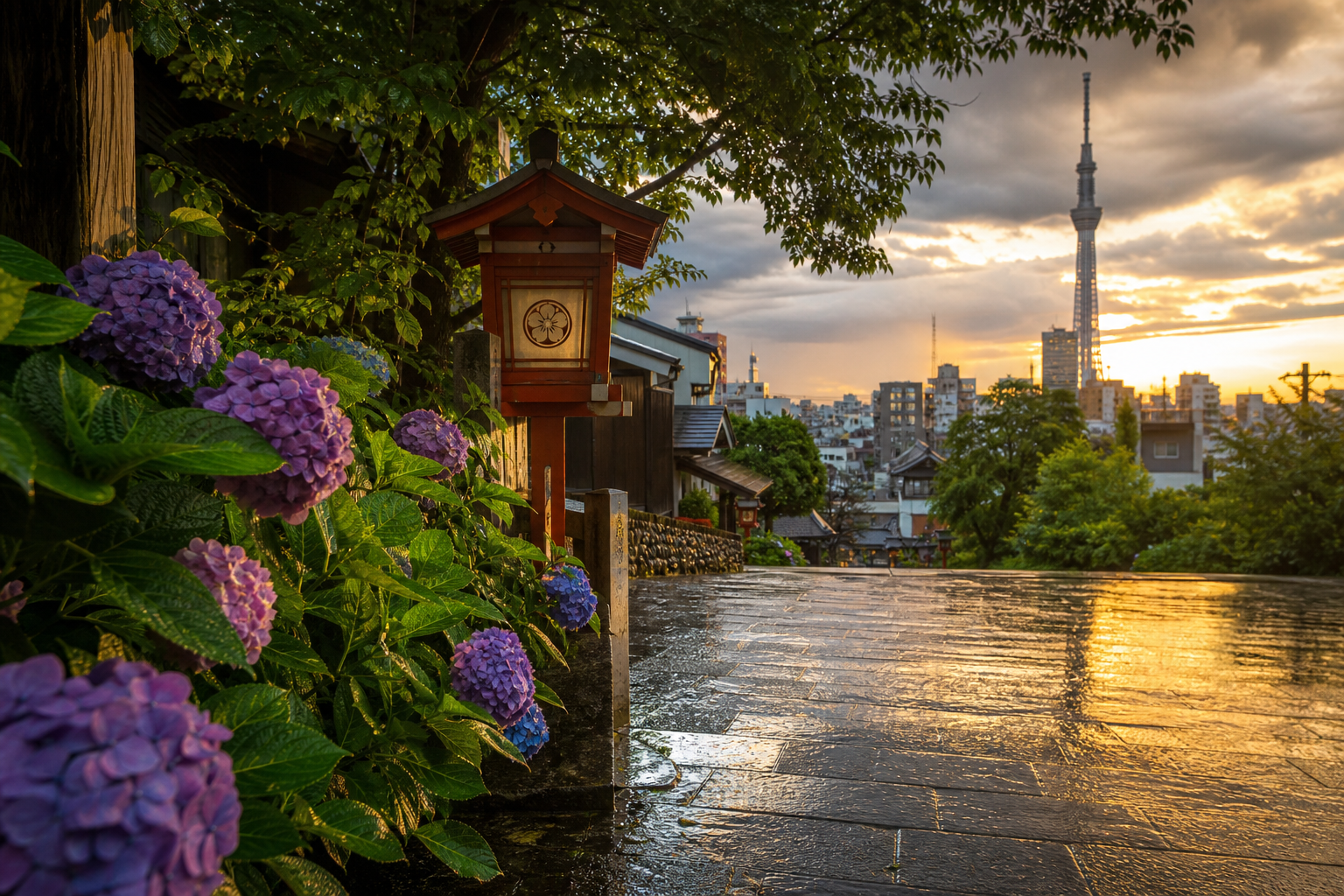
This guide covers everything first-time visitors need to know: when rain actually falls, what to do when it does, how to move around Tokyo without getting soaked, and whether you should even try to avoid the rainy season at all.
When Exactly Is Rainy Season in Tokyo in 2026?
In 2026, Tokyo’s tsuyu is predicted to run from approximately June 7 through July 19. Osaka and Kyoto follow a nearly identical schedule, starting around June 6 and ending around the same date.
Here is the key detail most travel sites leave out: it does not rain all day, every day. You can expect rain on roughly 12 to 15 days per month during June and July — meaning there are plenty of dry days mixed in. When it does rain, it often comes in short afternoon showers rather than all-day downpours. The chance of rain on any given day is around 45 percent.
Temperatures during tsuyu average around 22 to 28 degrees Celsius (72 to 82 degrees Fahrenheit). Rainy days feel slightly cooler, hovering closer to 21 degrees — actually quite comfortable compared to the brutal heat and humidity that follows in August.
The Mindset Shift That Changes Everything
Experienced Japan travelers often rate tsuyu as one of the best times to visit. Crowds at major sights are noticeably thinner than during cherry blossom season or the summer school holiday peak. Hotels cost less. Hydrangeas — arguably just as photogenic as cherry blossoms — bloom throughout June across temple gardens and neighborhood shrines.
The visitors who struggle during rainy season are the ones who planned an entirely outdoor itinerary with no backup. That is an easy problem to solve before you leave home.
Best Indoor Activities in Tokyo for Rainy Days
teamLab Planets TOKYO (Toyosu)
This immersive digital art museum in Toyosu is arguably the best possible rainy day activity in Tokyo — and it works better as an indoor experience anyway. Admission is 3,800 yen on weekdays and 4,200 yen on weekends for adults (18 and over). Junior high and high school students pay 2,800 yen; children ages 4 to 12 pay 1,500 yen; children under 4 enter free but still need a registered ticket on busy days.
Advance booking is strongly recommended regardless of weather, as timed-entry slots sell out weeks ahead. Check the official website for current opening hours before visiting, as hours vary by season.
The Ueno Museum Cluster
Ueno Park contains the highest concentration of major museums in Tokyo, all within easy walking distance of a single station — making it ideal when rain hits. The Tokyo National Museum (1,000 yen) holds the world’s largest collection of Japanese art, including samurai armor, Noh masks, lacquerware, and woodblock prints. The National Museum of Nature and Science (630 yen) features dinosaur skeletons and a full blue whale suspended from the ceiling. The National Museum of Western Art (500 yen) rounds out the cluster.
A full day across all three costs under 2,200 yen total — exceptional value for the volume of content. Plan for six to seven hours if you want to do each justice.
Edo-Tokyo Museum (Ryogoku) — Now Reopened
After a major multi-year renovation, the Edo-Tokyo Museum officially reopened on March 31, 2026. It chronicles the city’s transformation from the Edo period through to modern Tokyo using life-size recreations, detailed scale models, and interactive exhibits. Admission is approximately 600 yen. It is a 15-minute ride from Ueno on the JR Sobu line — easy to pair with the Ueno museums as a two-day plan.
Cup Noodles Museum Yokohama
Technically outside Tokyo but only about 30 minutes by train, this museum is entirely indoors and surprisingly engaging for any age. Entry costs 500 yen for adults, and you can create your own customized cup noodles at the My Cup Noodles Factory for an additional 500 yen. A separate Chicken Ramen Factory hands-on experience costs 800 yen for adults (500 yen for children). It makes an excellent half-day trip on a day when the weather turns.
The Underground City Strategy
Here is the most practical rainy day tip most guides do not cover: Tokyo has one of the most extensive underground pedestrian networks in the world. You can navigate between shops, restaurants, and subway lines for hours without ever opening an umbrella.
Under Tokyo Station alone, there are over 600 shops and restaurants spread across interconnected underground concourses — Gransta, First Avenue Tokyo Station, and Yaesu Shopping Mall are all linked. You can arrive by Shinkansen from another city and spend the entire afternoon without stepping outside once.
In Shinjuku, the Subnade underground mall connects directly to JR Shinjuku Station and Seibu-Shinjuku Station. From there, covered walkways and connected department store buildings extend the dry zone significantly, allowing you to reach Isetan and surrounding shops without getting wet. The Ginza to Yurakucho stretch is similarly connected underground.
What to Pack for Tokyo’s Rainy Season
You do not need to overpack. A compact travel umbrella handles most situations — and if you forget one, Japanese convenience stores stock them for around 500 to 700 yen. Lawson, FamilyMart, and 7-Eleven all carry them. Skip the large golf umbrella: in crowded Tokyo trains and on busy sidewalks, an oversized umbrella will make you extremely unpopular.
- Waterproof or water-resistant shoes — wet temple steps and stone streets are slippery
- Quick-dry fabrics — humidity stays high even between showers
- A light jacket or cardigan — heavily air-conditioned interiors feel cold when you arrive damp
- A small waterproof phone pouch — useful during heavier downpours at outdoor markets
One small etiquette note: Japanese stations and shops have umbrella drip bags at the entrance. Use them — shaking a wet umbrella indoors or on a crowded platform is considered inconsiderate.
Is Rainy Season Actually Worth Visiting?
For most first-time visitors: yes, if you plan for it. The combination of smaller crowds, lower accommodation prices, beautiful hydrangea scenery, and Tokyo’s excellent indoor infrastructure makes June and early July genuinely rewarding.
The only real drawback is reduced flexibility for outdoor-heavy itineraries. If your dream Tokyo trip depends on sunny outdoor market hopping or long days in open-air temple gardens, you may prefer traveling in late April or early May before tsuyu begins. But if you are willing to mix outdoor mornings with indoor afternoons — and embrace the occasional rainy atmosphere that makes the city look completely different — rainy season Tokyo will surprise you.
Pack the right gear, build in a few solid indoor backup options, and you will likely find yourself recommending tsuyu Tokyo to everyone who asks.
PR
Plan This Trip With Fewer Last-Minute Costs
Hotel prices around Tokyo can change quickly. Compare stays early, then check the travel gear checklist before you pack.
Editorial Review Note
This article was reviewed on July 26, 2026 to keep rainy-season advice practical for first-time visitors. Weather varies by year, so use this guide to plan flexible indoor options and check the latest forecast before each travel day.
How This Guide Was Reviewed
This article was reviewed on July 26, 2026 to reduce generic travel advice and make the page more useful before booking. Prices, opening rules, ticket windows, transport details, and affiliate availability can change, so verify official sources before final plans.
