Planning a trip to Japan in July? I won’t sugarcoat it: the heat is real, the crowds are real, and the humidity will find you. But here’s the thing nobody tells you before you board the plane — Japan in summer is also one of the most unforgettable travel experiences you can have. These are the seven things that caught me completely off guard.
1. The Heat Is on Another Level — But Japan Has a Secret Weapon
July temperatures in Tokyo and Kyoto regularly hit 33 to 35 degrees Celsius, and when you factor in the humidity, it can feel closer to 40. Kyoto is especially brutal — surrounded by mountains that trap heat and moisture, it runs several degrees hotter than the forecast suggests.
What surprised me: Japan has roughly 5 million vending machines across the country. You are almost never more than a few minutes away from an ice-cold drink. Convenience stores — Lawson, FamilyMart, 7-Eleven — also function as unofficial cooling stations, with powerful air conditioning and cold drinks stacked floor to ceiling. Locals duck in and out of them constantly. Do the same.
Practical tip: carry a sports drink like Pocari Sweat to replace electrolytes, not just water. Heat stroke (called netchu-sho in Japanese) is a genuine risk. Plan outdoor sightseeing before 10 AM or after 5 PM, and use the middle of the day for museums, indoor experiences, or shopping.
2. Gion Matsuri Is an Entire Month — Not Just One Day
If you’re visiting Kyoto in July 2026, the Gion Matsuri runs the entire month of July 1 through 31. Most people picture one big parade, but the festival is a four-week series of rituals, events, and street parties.
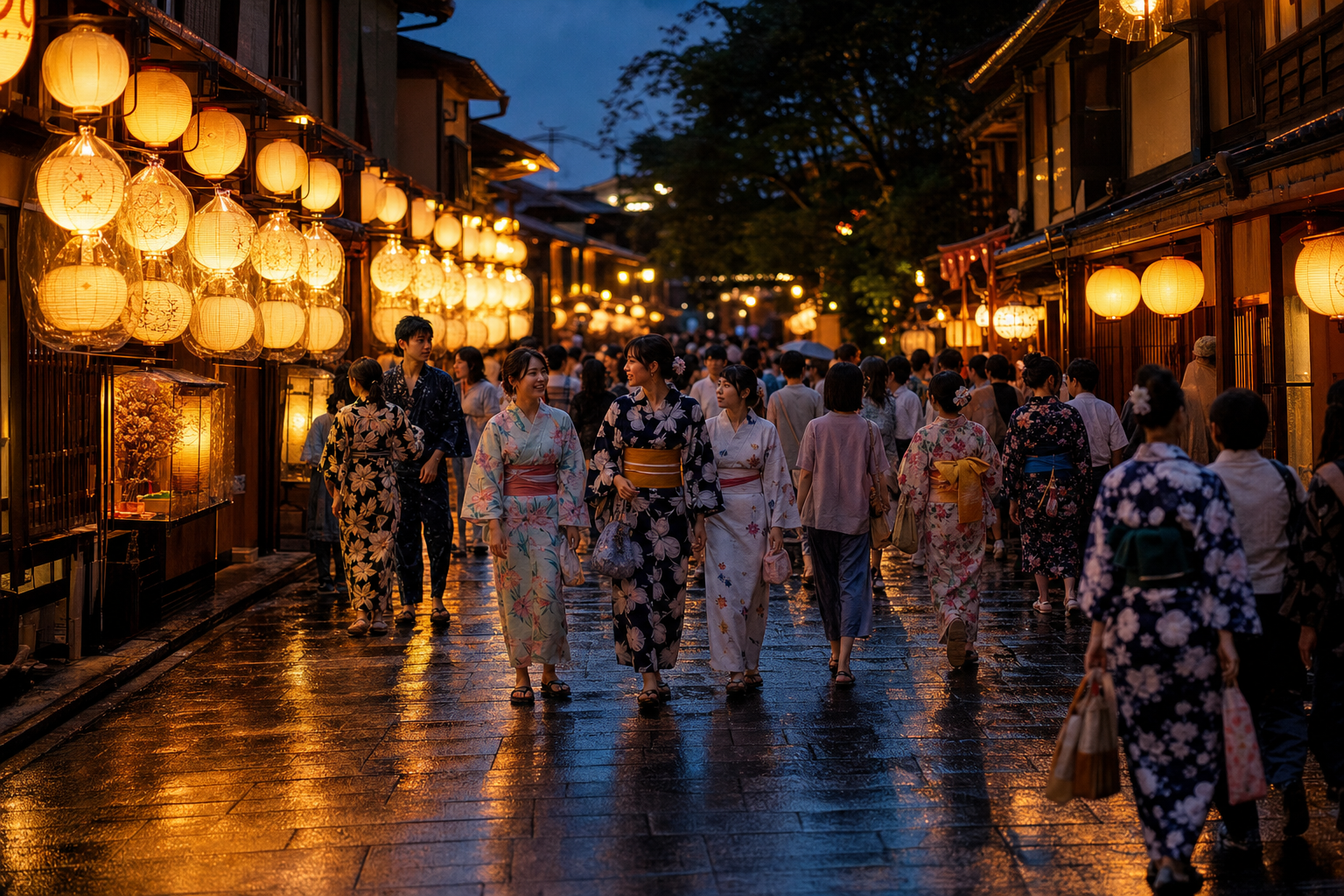
The highlights are the Yoiyama evenings (July 14 to 16 and July 21 to 23), when central Kyoto closes its streets to cars and fills with food stalls and people in yukata. The two main float parades — the Yamaboko Junko — take place on July 17 (23 floats) and July 24 (11 floats), starting around 9 AM from Shijo-Karasuma.
What surprised me: you don’t need tickets for most of it. The street events are free. Arriving early on parade mornings gives you a front-row view without the worst of the crowds.
3. Fireworks Shows Are Enormous — and Deeply Cultural
The Tokyo Sumida River Fireworks Festival launches around 20,000 shells over the river near Asakusa, with crowds exceeding one million. That number sounds impossible until you’re standing in it.
What I didn’t expect: hanabi — the Japanese word for fireworks — literally means flowers of fire. The tradition carries a Buddhist understanding of impermanence: beauty that exists for a moment and is gone. Knowing that changes how you watch them.
Also worth knowing: the Kamakura Fireworks Festival features underwater fireworks, reflected across the ocean surface at Yuigahama Beach. It’s a completely different experience from a city show.
4. Osaka’s Tenjin Matsuri Is One of Japan’s Three Great Festivals
Most first-time visitors to Japan focus on Tokyo and Kyoto. But on July 25, 2026, Osaka holds the Tenjin Matsuri — one of Japan’s three great festivals — centered on Osaka Tenmangu Shrine. The highlight is a river procession of decorated boats along the Okawa River, followed by a large fireworks display overhead.
If your itinerary includes Osaka in late July, this is worth building your schedule around.
5. Hokkaido Is a Different Country in Summer
While Tokyo bakes at 35 degrees, Hokkaido averages 16 to 24 degrees Celsius in July — cool, low humidity, and genuinely comfortable. Lavender fields around Furano peak in mid-July and are unlike anything else in Japan.
What surprised me: almost nobody I met before the trip mentioned Hokkaido as a summer destination. It’s not on the typical first-timer circuit. That’s exactly why it’s worth considering — especially if heat is a dealbreaker for you.
6. Everyone Wears Yukata — and You Can Too
During summer festivals, Japanese people of all ages wear yukata — the casual cotton kimono worn in warm weather. Unlike the formal kimono, yukata are lightweight, inexpensive, and available everywhere in July, from convenience stores to department stores to festival stalls.
Wearing one to a matsuri or fireworks show is not considered cultural appropriation — it’s genuinely welcomed. Rental shops near major festival sites can dress you in under 30 minutes. First-timers often describe it as one of the most memorable parts of their summer trip.
7. Book Hotels Early — Summer Is Peak Domestic Season
Japanese school summer break begins in late July, which means the country’s own travelers hit the road simultaneously. Hotels in popular areas — Tokyo, Kyoto, Osaka, Hokkaido — fill up weeks in advance. Prices reflect the demand.
What I learned the hard way: the Gion Matsuri parade weekends (July 17 and 24) and the Sumida River Fireworks date book out months ahead. If those dates matter to you, plan accordingly.
Final Thoughts
Japan in July is hot, crowded, and occasionally exhausting. It is also festival season, fireworks season, and one of the few times of year when the whole country seems to be celebrating something. The key is preparation: book early, start mornings early, stay hydrated, and let the heat slow you down enough to actually enjoy what’s in front of you.
The surprises are what make it worth it.
PR
Plan This Trip With Fewer Last-Minute Costs
Hotel prices around Japan can change quickly. Compare stays early, then check the travel gear checklist before you pack.
How This Guide Was Reviewed
This article was reviewed on July 26, 2026 to reduce generic travel advice and make the page more useful before booking. Prices, opening rules, ticket windows, transport details, and affiliate availability can change, so verify official sources before final plans.
