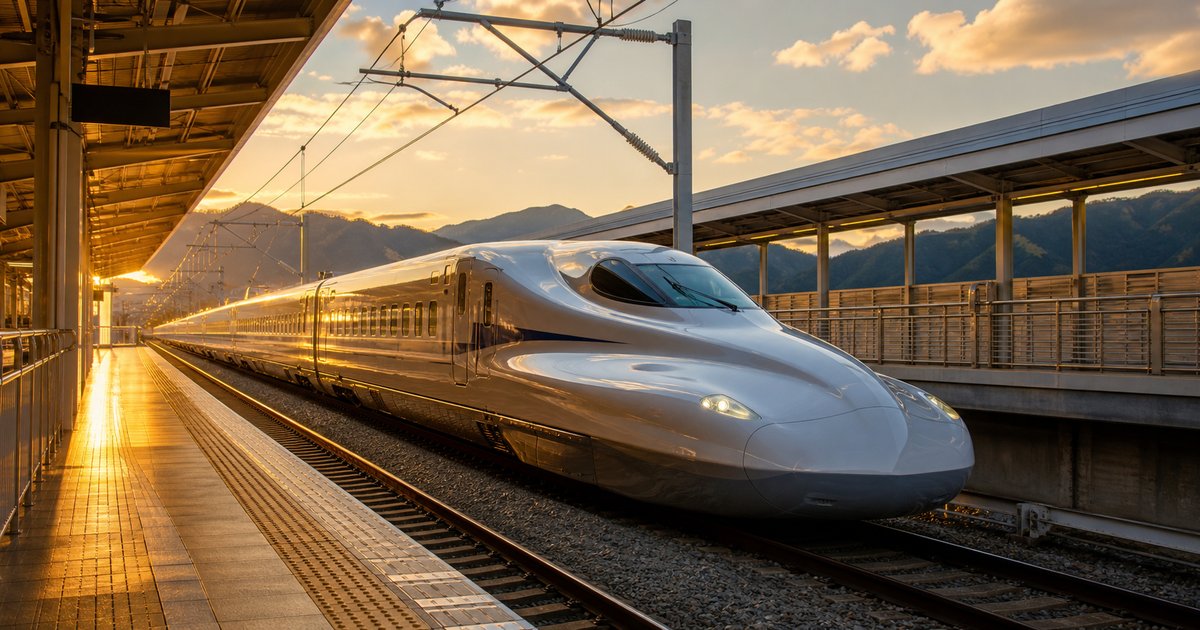
Few travel experiences capture the magic of modern Japan quite like gliding across the countryside at nearly 320 km/h aboard the Shinkansen. The bullet train is fast, spotless, and famously punctual — but for first-time visitors, the ticket machines, seat reservations, and station logistics can feel intimidating. This complete 2026 guide breaks down everything you need to know to ride with total confidence.
PR
Before You Lock the Route, Compare the Big Costs
Hotels, flights, and packages can change the real cost of a Japan trip more than small daily spending. Check the main booking options before you finalize the itinerary.
What Is the Shinkansen?
The Shinkansen is Japan’s high-speed rail network, connecting major cities like Tokyo, Kyoto, Osaka, Hiroshima, and beyond. Operated mainly by Japan Railways (JR), it’s renowned for its safety record, comfort, and an average delay measured in seconds. The flagship route — the Tokaido Shinkansen between Tokyo and Osaka — is one of the busiest high-speed lines on Earth.
In 2026, the network continues to expand, with ongoing extensions of the Hokuriku and Nishi Kyushu lines and the high-tech Nozomi trains running more frequently than ever.
Understanding Train Types and Speeds
Not all Shinkansen are equal. On each line you’ll find different service tiers:
- Nozomi / Mizuho — The fastest services with the fewest stops. Note: these are not covered by the standard Japan Rail Pass (a supplement applies in 2026).
- Hikari / Sakura — Slightly slower but fully covered by the JR Pass. Great value for pass holders.
- Kodama — Stops at every station; slowest but least crowded.
How to Buy Shinkansen Tickets in 2026
You have several convenient options for booking:
1. Online Reservation (Recommended)
Services like SmartEX and EX Reservation let you book Tokaido and Sanyo Shinkansen seats from your phone and link your IC card (Suica or PASMO) for ticketless entry. Simply tap your card at the gate — no paper ticket required. This is the easiest method for first-timers in 2026.
2. Ticket Machines at the Station
Green JR ticket machines offer full English menus. Select your departure and arrival stations, train type, and seat preference, then pay by cash or card. You’ll receive two tickets: a basic fare ticket and a limited express ticket. Insert both together at the gate.
3. Ticket Office (Midori-no-Madoguchi)
For complex itineraries, the staffed JR ticket office can help. Bring your destinations written down to speed things up.
Should You Buy a Japan Rail Pass?
The JR Pass offers unlimited travel on most JR lines for 7, 14, or 21 days. After the 2023 price increase, you’ll generally need to make several long-distance trips (e.g., Tokyo–Kyoto–Hiroshima round trips) to break even. In 2026, do the math:
- A round trip Tokyo–Kyoto alone costs roughly ¥28,000.
- The 7-day pass costs around ¥50,000.
If your itinerary is concentrated in one region, individual tickets or regional passes (like the Kansai Wide Pass) may be cheaper.
Reserved vs. Non-Reserved Seats
Most Shinkansen trains have both:
- Reserved seats (指定席) — Guarantee you a specific seat. Essential during peak seasons like Golden Week, Obon (August), and New Year.
- Non-reserved seats (自由席) — Sit in designated cars on a first-come basis. Cheaper and flexible, but you may stand if crowded.
- Green Car — First class with wider, plush seats and more legroom — worth the splurge on long routes.
Pro tip: For Mt. Fuji views on the Tokyo–Osaka route, book a seat on the D or E side (right side heading toward Osaka).
Navigating the Station
Japanese stations are large but well-signed in English. Follow these steps:
- Look for blue signs marked “Shinkansen” and the JR logo.
- Pass through the special Shinkansen gates (separate from local lines).
- Check the electronic boards for your train name, departure time, and platform.
- Markings on the platform show exactly where each car door will stop — line up here.
Trains stop for only 1–2 minutes, so be ready to board promptly.
Onboard Etiquette and Comfort
Riding the Shinkansen is a pleasure when you follow local norms:
- Keep phone conversations to the deck areas between cars.
- Recline your seat gently and check behind you first.
- Store large luggage in the overhead racks or reserved oversized baggage spaces (book these in advance for bags over 160cm total dimensions).
- Bring an ekiben (station bento box) — eating onboard is a beloved tradition.
- Trash bins are located near the doors; keep your area tidy.
Money-Saving Tips for 2026
- Travel midweek and off-peak to avoid crowds.
- Consider regional JR passes if you’re staying in one area.
- Book non-reserved seats on Kodama trains for budget travel.
- Use the SmartEX early-booking discounts where available.
Sample First-Timer Route: Tokyo to Kyoto
Board a Nozomi at Tokyo Station and you’ll reach Kyoto in just 2 hours and 15 minutes — passing Mt. Fuji along the way. It’s the perfect introduction to Shinkansen travel: fast, scenic, and effortlessly smooth. From Kyoto, you can easily continue to Osaka, Nara, or Hiroshima.
With a little preparation, the Shinkansen transforms long-distance travel into one of the highlights of your Japan trip. Once you’ve experienced the seamless efficiency and quiet comfort, you’ll understand why it’s the envy of the world.
Plan Your Trip
Find the best hotel deals:
- Booking.com — Compare thousands of hotels worldwide
- Rakuten Travel — Great rates on hotels in Japan
How This Guide Was Reviewed
This article was reviewed on July 26, 2026 to reduce generic travel advice and make the page more useful before booking. Prices, opening rules, ticket windows, transport details, and affiliate availability can change, so verify official sources before final plans.
