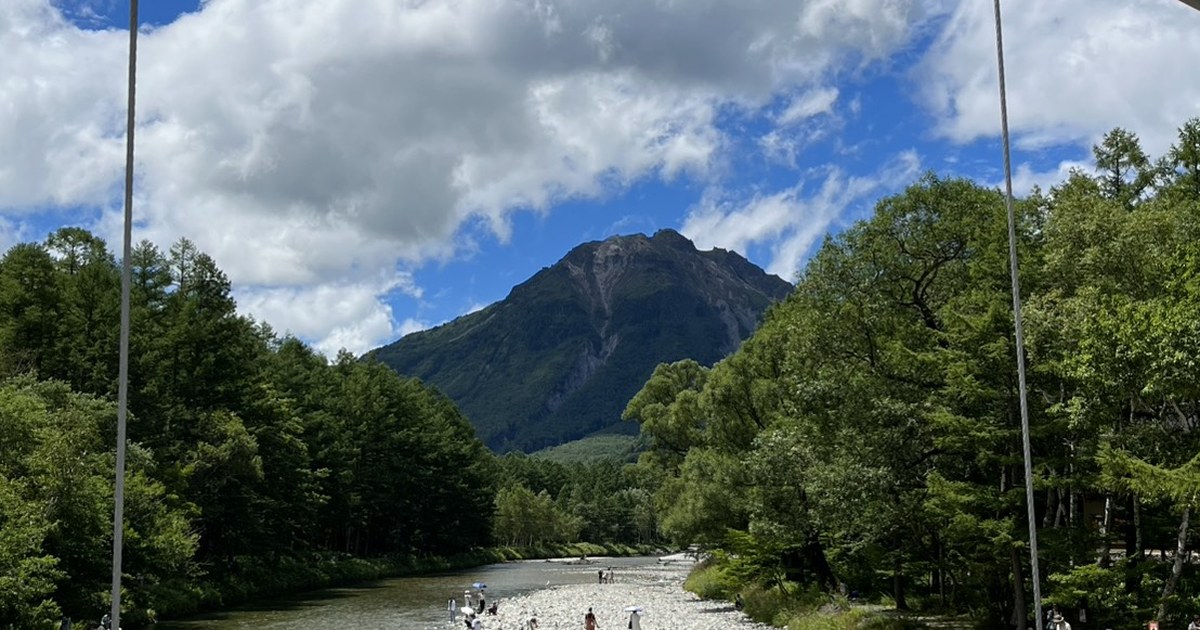
Kamikochi is the most beautiful place in Japan that you cannot drive into. I have been twice, both times under a clear blue sky, and the mountains, the turquoise river and the crisp alpine air were even better than the photos promised. But there is one thing that trips up almost every first time visitor, and it is worth understanding before you go: private cars are not allowed in. This is the honest, first-hand guide to getting there by car anyway, when to go, and what is actually worth seeing.
First, the thing no one tells you: you cannot drive in
Private cars are banned beyond the Kama Tunnel. Instead you park at one of two gateways and ride the last stretch in. From the Nagano side you use the Sawando parking area, at about 800 yen per day. From the Gifu side you use the Akandana parking area, at about 600 yen per day. From there you take a shuttle bus or a taxi. The Sawando shuttle is about 4,200 yen for a round trip to the Kamikochi bus terminal.
As a rough rule, visitors coming from Matsumoto or Tokyo use Sawando, and visitors coming from Takayama or Nagoya use Akandana. Kamikochi is only open from April 17 to November 15 in 2026, and it closes completely through winter. The road runs from about 5 in the morning to 7 in the evening, and later in July and August. So the honest version of driving to Kamikochi is simple: drive to a parking lot, then ride in. Once you accept that, the rest is easy.
When to go
Any clear day between opening and closing is wonderful, but each season looks different. Late May pairs fresh green with snow still clinging to the high peaks. Summer, when I went, is lush and green, with the river low enough to sit beside. October brings gold and red foliage. Whatever the season, a clear morning is the goal, because the Hotaka peaks are sharpest early and clouds tend to build over the mountains by the afternoon.
What to actually see
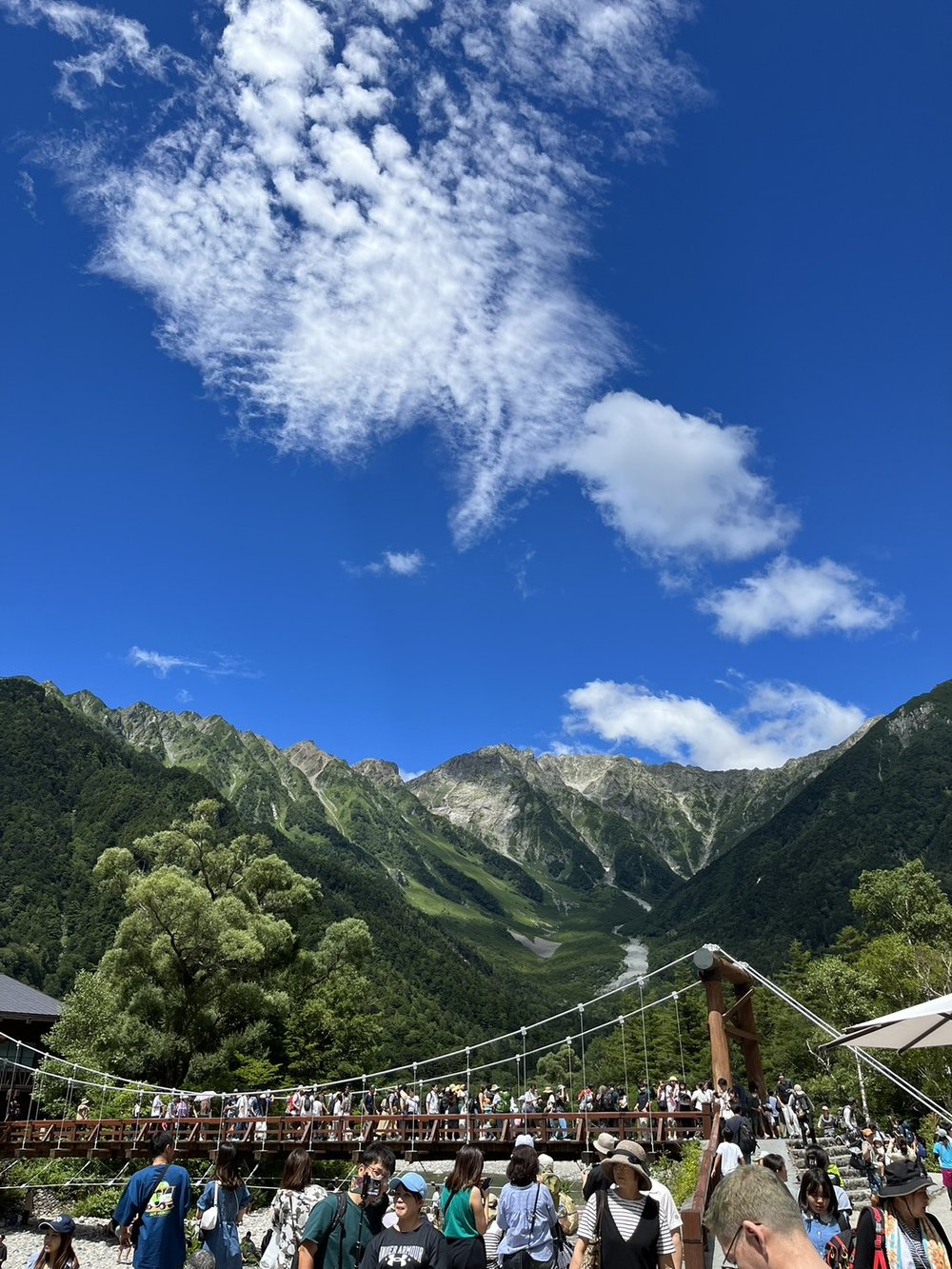
Most of Kamikochi is flat, well kept riverside path, so you do not need to be a hiker. The center of it all is Kappa Bridge, a wooden suspension bridge with the Hotaka range rising straight ahead. Downstream sits Taisho Pond, known for its still reflections and pale standing trees. Upstream, about an hour on foot, is the calm and sacred Myojin Pond. An easy loop of two to four hours covers the highlights without any climbing.
What a clear day gives you
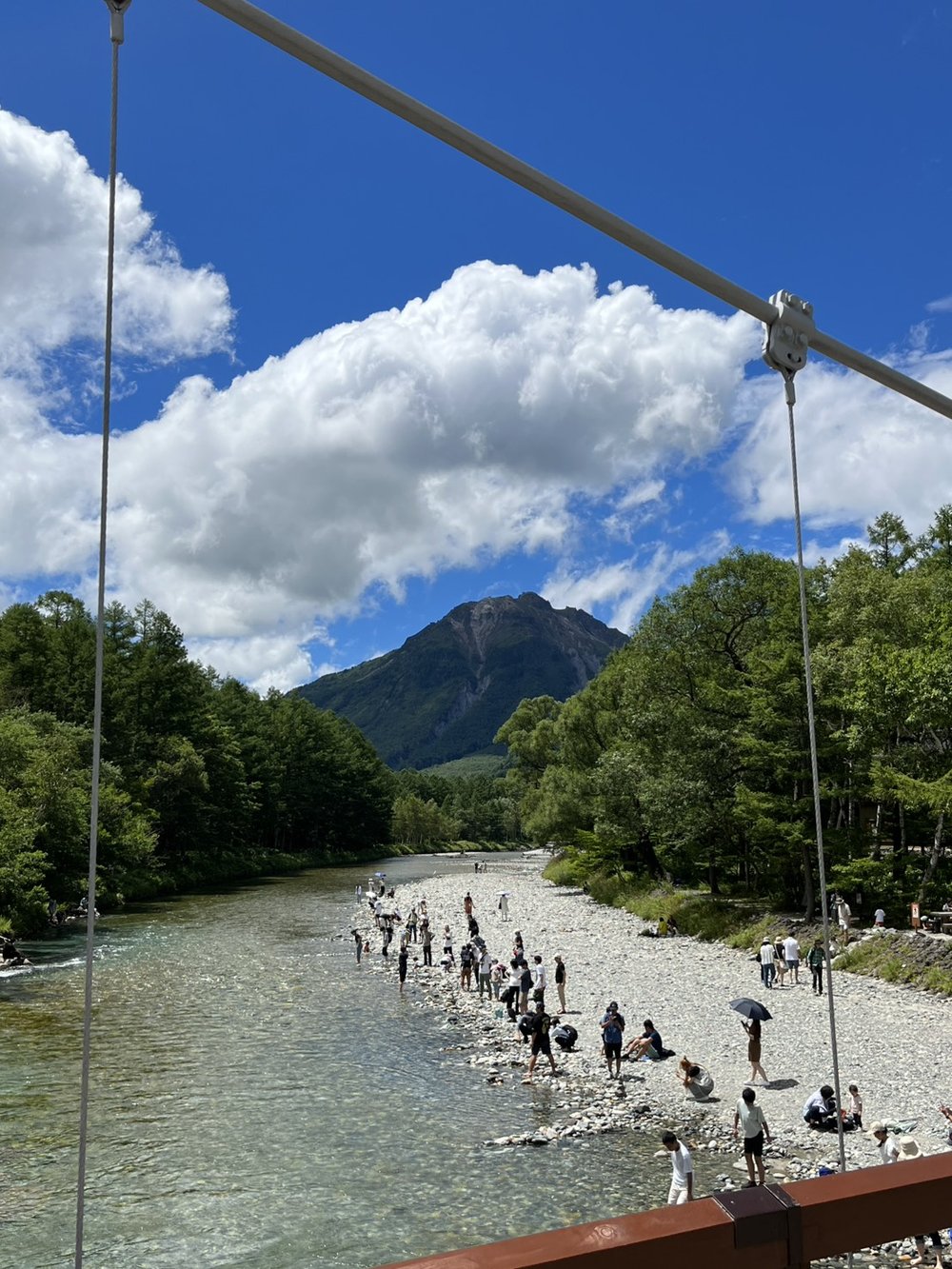
Both times I visited, the sky was a deep blue, and it made all the difference. The Azusa River runs an almost unreal shade of clear turquoise over pale stones, cold enough to make you gasp if you dip your feet in, which plenty of people do on a warm day. The grey Hotaka peaks and the green slopes catch the light, and the whole valley feels bright and alpine. When clouds roll in the peaks can disappear, so it really is worth choosing your day around the forecast and starting early.
Practical tips from two visits
- Kamikochi sits at about 1,500 meters, so it stays cool even in summer. Bring a light layer even on a hot day.
- Go early. The first shuttles run around 5 in the morning, the light is best then, and the bridge gets very crowded by midday, as you can see in my photos.
- Bring cash for the parking, and some snacks. Facilities exist but are limited and can be busy.
- This is a national park and bear country. Stay on the paths and carry your rubbish back out with you.
So, is it worth it?
Completely. Kamikochi is one of the easiest ways to stand in the heart of the Japanese Alps without a serious hike, and on a clear day it is breathtaking. Just go in with the right expectation: you drive to the edge, ride the last stretch in, and start early. Do that, and one of the finest mountain views in the country is almost handed to you.
Planning to see more of the area? See our Nagano Prefecture travel guide for more places to pair with a Kamikochi day.
PR
Plan This Trip With Fewer Last-Minute Costs
Hotel prices around Matsumoto can change quickly. Compare stays early, then check the travel gear checklist before you pack.
How This Guide Was Reviewed
This article was reviewed on July 26, 2026 to reduce generic travel advice and make the page more useful before booking. Prices, opening rules, ticket windows, transport details, and affiliate availability can change, so verify official sources before final plans.
