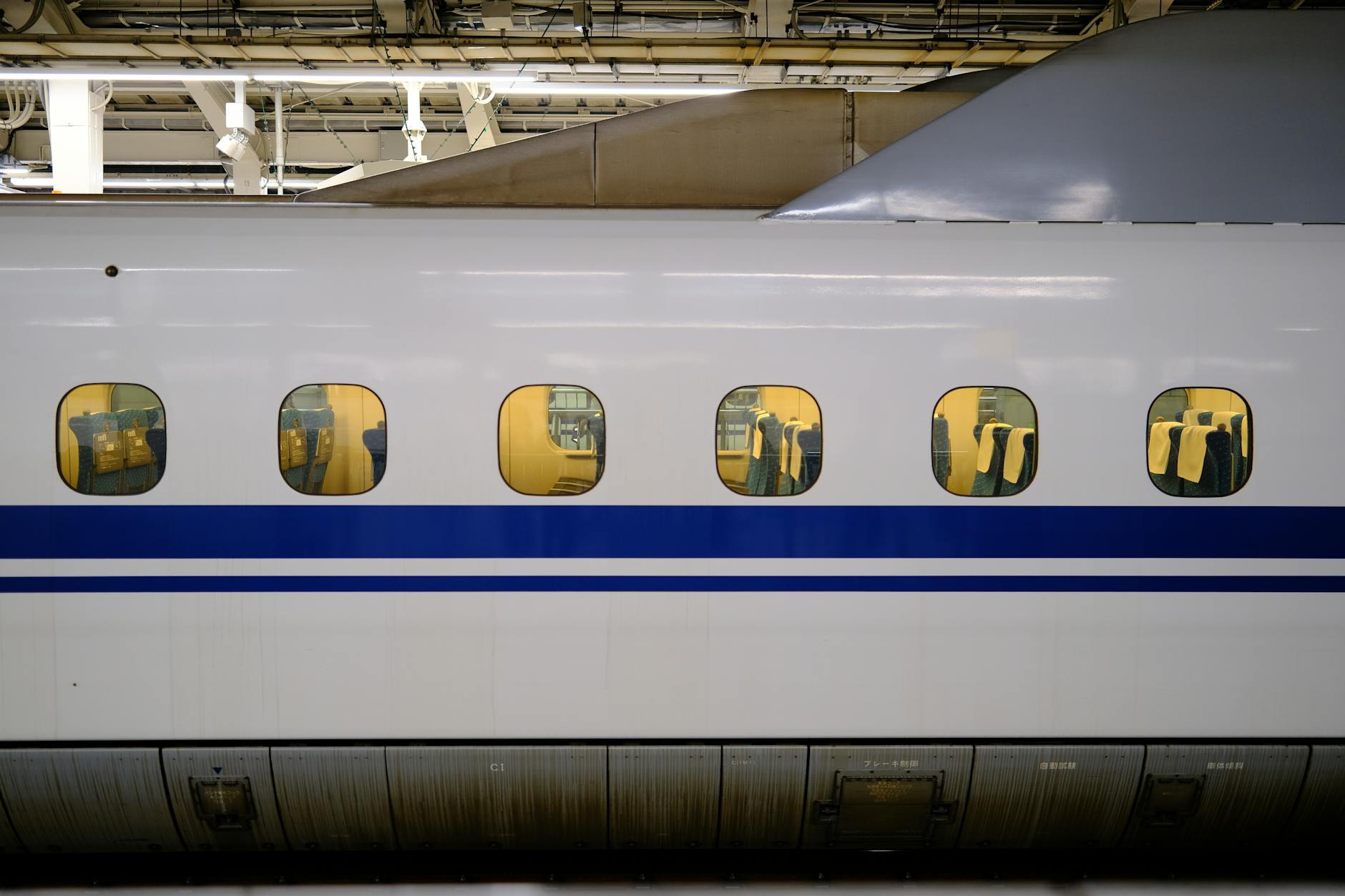
The shinkansen — Japan’s high-speed bullet train — is one of the great travel experiences in the world. It is fast, punctual to within seconds, and comfortable in a way that makes flying feel antiquated. If you are visiting Japan, you will almost certainly use it, and understanding how it works will save you money and time.
How Fast Are Shinkansen Trains?
The fastest shinkansen in regular service travel at up to 320 kilometers per hour. The journey between Tokyo and Osaka, which takes about 2.5 hours by shinkansen, would take around 8 hours by car. Tokyo to Kyoto is just over 2 hours. Tokyo to Hiroshima is about 4 hours. Tokyo to Sapporo via the new Hokkaido Shinkansen route is around 5 hours.
The Japan Rail Pass
The Japan Rail Pass — commonly called the JR Pass — allows unlimited travel on most JR trains, including most shinkansen lines, for a set period of 7, 14, or 21 days. The pass must be purchased outside Japan and exchanged for a physical pass upon arrival. As of 2024, the 7-day pass costs around 50,000 yen for an ordinary seat. It is worth buying if you plan to travel between multiple cities — a single round trip between Tokyo and Kyoto costs around 28,000 yen without a pass.
Types of Shinkansen Services
On the Tokaido Shinkansen between Tokyo and Osaka, three service levels operate: the Nozomi stops only at major cities and is the fastest option, but is not covered by the JR Pass. The Hikari stops at a few more stations and is fully covered by the JR Pass. The Kodama stops at every station and is the slowest. For JR Pass holders, the Hikari service is usually the best choice.
Reserved vs Unreserved Seats
Every shinkansen train has both reserved and unreserved cars. Reserved seats can be booked at no extra charge with a JR Pass and are highly recommended during peak seasons such as Golden Week, Obon in August, and New Year. Unreserved cars are first-come-first-served and can be very crowded on busy travel days. For long journeys, always reserve a seat.
How to Board a Shinkansen
At shinkansen stations, look for the dedicated shinkansen gates separate from local train lines. On the platform, numbered markers show exactly where each car door will stop — look for your car number and line up accordingly. Trains depart with extraordinary precision. Do not stand at the wrong marker or you will board the wrong car. Announcements are made in both Japanese and English at major stations.
What to Eat on Board
Buying an ekiben — a station bento box — before boarding is one of the great pleasures of shinkansen travel. Every major terminal station sells local specialty bento boxes that reflect regional cuisine. Tokyo Station alone has dozens of options. Pick one up at the station food hall before you board and enjoy it at your seat. Hot drinks and snacks are also sold from trolleys on the train.
Practical Tips
- Arrive at the platform 5 minutes before departure — trains leave exactly on schedule
- Luggage storage compartments are above your seat and at the rear of each car
- Oversized luggage must be booked in advance on Nozomi, Hikari, and Kodama services
- Phone calls are not permitted in the passenger cabin — step to the entrance area
- Green Car is first-class seating with wider seats and more legroom
The shinkansen is not just transportation — it is part of what makes Japan extraordinary. Even if you could fly, you would choose the train. Almost everyone does.
Plan Your Japan Trip
Ready to visit Japan? Find and book hotels across Japan — from budget guesthouses to luxury ryokan.
