PR / TRIP PLANNING
Plan winter comfort before booking rural day trips
Hokkaido winter travel is easier when your hotel area, early starts, and cold-weather gear are planned together.
Where to See Red-crowned Cranes
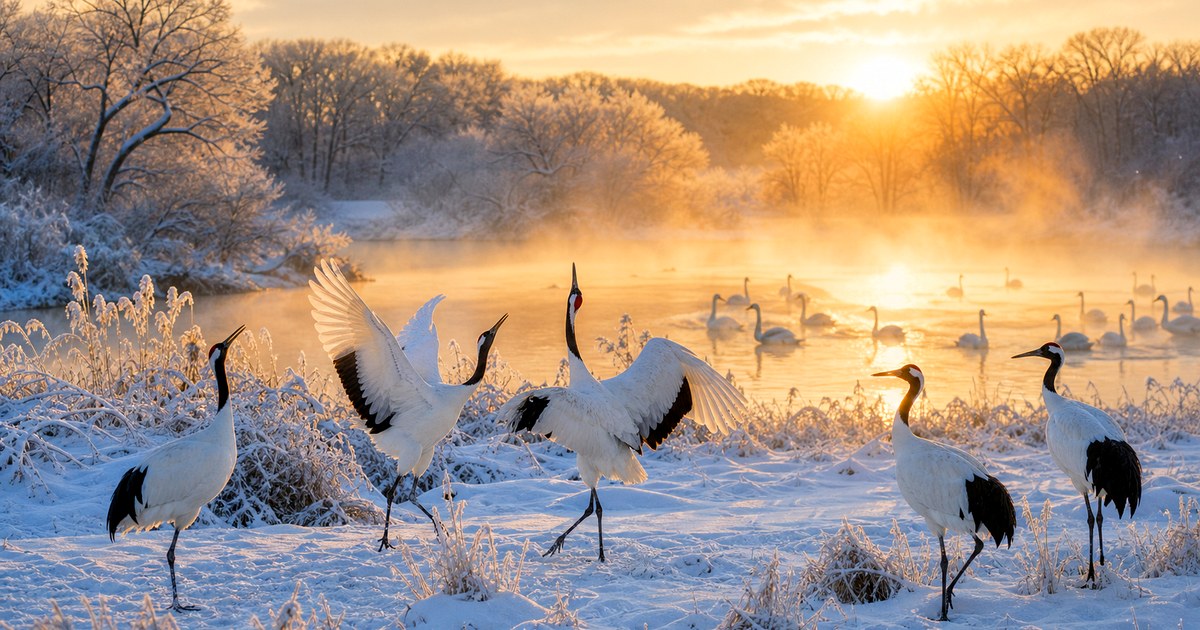
Red-crowned cranes are the star of winter birding in Hokkaido. They are large, elegant, and strongly associated with eastern Hokkaido’s snowy wetlands. The most famous areas are around Kushiro and Tsurui. Popular viewing spots include Tsurui-Ito Tancho Sanctuary, Akan International Crane Center, and other crane feeding or observation areas in the region.
Access is easiest with a rental car, but winter driving in Hokkaido is serious. Roads can be icy, visibility can drop, and distances are long. If you do not drive on snow, consider guided tours from Kushiro or Akan. Public transport exists but is limited, and taxis can become expensive.
January and February are usually excellent months for crane photography because of snow and cold air. Early morning can be magical, but temperatures can be far below freezing.
Where to See Whooper Swans
Whooper swans winter in several parts of Hokkaido, often on lakes, rivers, and wetlands where water remains open. Lake Kussharo is one of the classic places to see swans in winter, especially around warm water areas near the shore. You may also find swans around eastern Hokkaido wetlands and other lakes depending on conditions.
Swans are generally easier for casual travelers than cranes because some viewing spots are close to roads, parking areas, or onsen districts. Still, birdwatching Hokkaido winter plans should stay flexible. Birds move with weather, ice, feeding conditions, and disturbance.
For photography, morning light and steam from warm water can create beautiful scenes. Bring a longer lens if you have one, but do not push too close. Large birds still need space.
Suggested Winter Route
A practical 4-day route starts with a flight or train to Kushiro. Day 1: arrive, stay in Kushiro, and prepare gear. Day 2: visit crane sites around Tsurui or Akan. Day 3: travel toward Lake Kussharo or Akan-Mashu area for swans, winter scenery, and possibly eagles or other birds. Day 4: return to Kushiro or continue to Abashiri depending on your wider Hokkaido plan.
If you have more time, add Nemuro for sea eagles and coastal birding, or Abashiri for drift ice season. If you have less time, focus only on Kushiro and Tsurui. Trying to cover all of eastern Hokkaido in two days leads to too much driving and not enough watching.
Budget for higher winter transport costs. Rental cars, fuel, winter tires, guides, and remote accommodation can add up. Guided birding days can cost more, but they may save time and reduce winter driving stress.
Birders who do not want to drive should choose accommodation carefully. Staying near Kushiro Station gives access to trains, buses, and some tour pickups, but it may place you farther from sunrise crane activity. Staying in Tsurui or Akan can put you closer to birds, but dining and transport options are more limited. For a first birdwatching Hokkaido winter trip, a guided day from Kushiro is often the best compromise.
Tips and Warnings
Dress much warmer than you think. Use insulated boots, gloves that allow camera control, thermal layers, a hat, and a windproof outer layer. Carry spare camera batteries because cold drains them quickly. A thermos is not a luxury; it is useful.
Never feed birds unless you are at an official managed site where feeding is part of conservation practice. Do not cross ropes, enter fields, or approach cranes too closely. Red-crowned cranes are protected and sensitive to disturbance.
For birdwatching Hokkaido winter trips, weather is the boss. Build spare time into your route, especially if you have flights. Snowstorms can delay roads, trains, and buses.
Ethics matter as much as gear. Keep distance, use a long lens or binoculars, and follow signs at sanctuaries. If other photographers are crowding a bird, do not join them. Winter survival is hard for wildlife, and forcing birds to move wastes their energy. A respectful observer gets better behavior and a better trip.
Beginners should rent or bring binoculars before investing in a large camera lens. Binoculars are lighter, cheaper, and often more useful for identifying birds in blowing snow. A small field guide or offline bird app also helps because winter days are short and you may not have time to look everything up later.
Final Verdict
Birdwatching Hokkaido winter travel is one of Japan’s most rewarding niche trips if you prepare properly. Base yourself in eastern Hokkaido, prioritize cranes around Kushiro and Tsurui, add swans around winter lakes, and do not underestimate the cold. For serious birders and patient photographers, it is worth the effort.
How This Guide Was Reviewed
This article was reviewed on July 26, 2026 to reduce generic travel advice and make the page more useful before booking. Prices, opening rules, ticket windows, transport details, and affiliate availability can change, so verify official sources before final plans.
