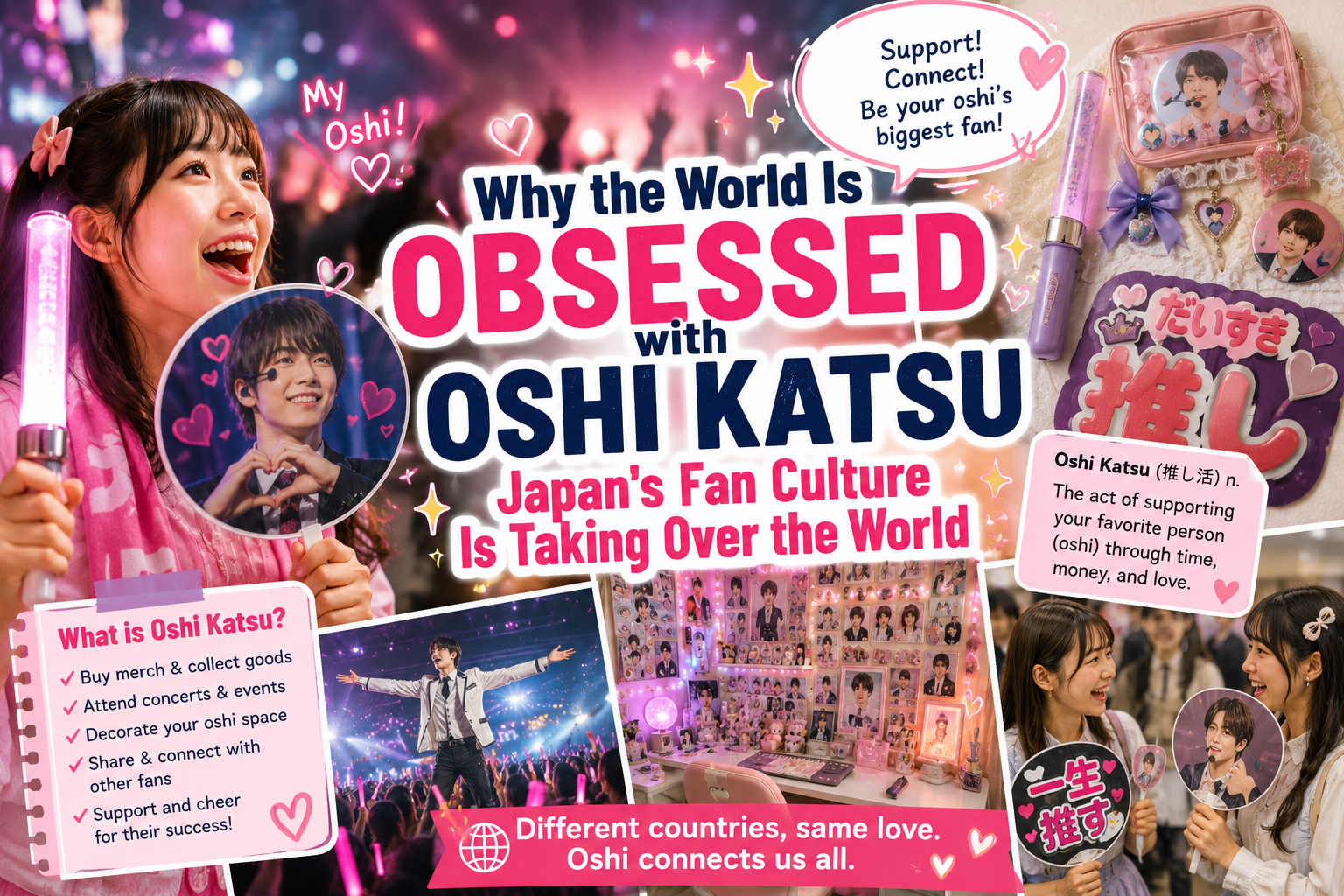
There is a Japanese word that has no satisfying equivalent in English: oshi, meaning the person, character, or group you support with particular devotion within a fandom. The practice of actively supporting your oshi, known as oshi-katsu or oshi activity, has evolved from a niche behaviour among idol fans into a mainstream cultural practice that shapes enormous sectors of the Japanese economy and is now spreading internationally with remarkable speed.
What Is Oshi-Katsu?
Oshi-katsu encompasses the full range of activities through which fans express and sustain their devotion to a favourite performer, athlete, fictional character, or virtual creator. This includes attending concerts and events, purchasing official merchandise, collecting trading cards and photocards, visiting locations associated with the oshi, posting supportive content on social media, and participating in voting campaigns or promotional activities that benefit the oshi’s career.
The distinguishing feature of oshi-katsu compared to conventional Western fan culture is its explicit framing as a reciprocal relationship in which fan support has tangible consequences for the oshi’s success. Japanese idol culture has historically operated on this logic, with fan voting determining which members appear in music videos, which songs get promoted, and which individuals receive expanded opportunities. The oshi-katsu framework extends this reciprocity beyond idol culture into every category of creator and performer.
The Economics of Oshi-Katsu
Oshi-katsu is a significant economic force. Japanese research suggests that devoted fans spend an average of several hundred dollars per month on activities related to their oshi, with a subset of extremely committed supporters spending amounts that would require most people to reorganise their financial priorities. The oshi-katsu market drives demand for merchandise, concert tickets, fan club memberships, and physical media in an era when most entertainment consumption has shifted to streaming.
The physical merchandise component of oshi-katsu has been particularly resilient. Trading cards, acrylic stands, official photographs, and branded goods maintain strong demand because they function as tangible proof of the relationship between fan and oshi, objects that carry emotional weight beyond their physical form. This insistence on physical, ownable objects within a digital entertainment landscape has produced a collectible market of extraordinary variety and volume.
Oshi-Katsu Goes International
The global spread of K-pop fandoms, which operate on structural principles similar to Japanese idol culture, created the conditions for international audiences to understand and adopt oshi-katsu practices. K-pop fans worldwide have developed collecting behaviours around photocards, limited editions, and merchandise that directly parallel Japanese oshi-katsu, often using Japanese terminology borrowed through fan community cross-pollination.
The rise of virtual YouTubers, known as VTubers, has extended oshi-katsu practices into digital creator spaces. Fans of VTubers maintain oshi relationships with characters who exist only digitally but whose perceived personalities and creative output generate the same devoted support that physical performers inspire. This digital extension of oshi-katsu has introduced the practice to audiences with no prior connection to idol or anime culture.
Oshi-Katsu and Japanese Tourism
Oshi-katsu has become a significant driver of Japanese inbound tourism. Fans travel to Japan specifically to visit locations featured in content by their favourite creators, purchase merchandise available only at Japanese official stores, attend live events or handshake sessions, and experience the concentrated oshi-katsu infrastructure of cities like Tokyo and Osaka.
Akihabara in Tokyo remains the physical hub of oshi-katsu merchandise culture, with multi-floor buildings dedicated to idol goods, anime merchandise, and creator-associated products. Harajuku’s Omotesando area hosts flagship merchandise shops for major entertainment properties. Pop-up events and limited merchandise drops generate queues and social media activity that function as their own form of oshi-katsu participation for those who attend.
What Oshi-Katsu Tells Us About Connection
At its core, oshi-katsu reflects something true about human psychology that transcends cultural context: the desire to feel genuine connection to something beyond everyday routine, and the willingness to invest meaningfully in maintaining that connection. The specificity of the oshi relationship, directed at one particular person or character rather than diffused across a general entertainment preference, creates a quality of attention and emotional investment that conventional consumerism rarely produces.
Whether the oshi is a real performer, a fictional character, or a digital creation, the practice of supporting them actively, of showing up with time, money, and creative attention, generates a sense of purpose and community that explains oshi-katsu’s growth far better than any economic analysis. People need things to care about. Japan developed a remarkably sophisticated cultural technology for directing that need, and the world is gradually learning its vocabulary.
Plan Your Japan Trip
Ready to visit Japan? Find and book hotels across Japan — from budget guesthouses to luxury ryokan.
