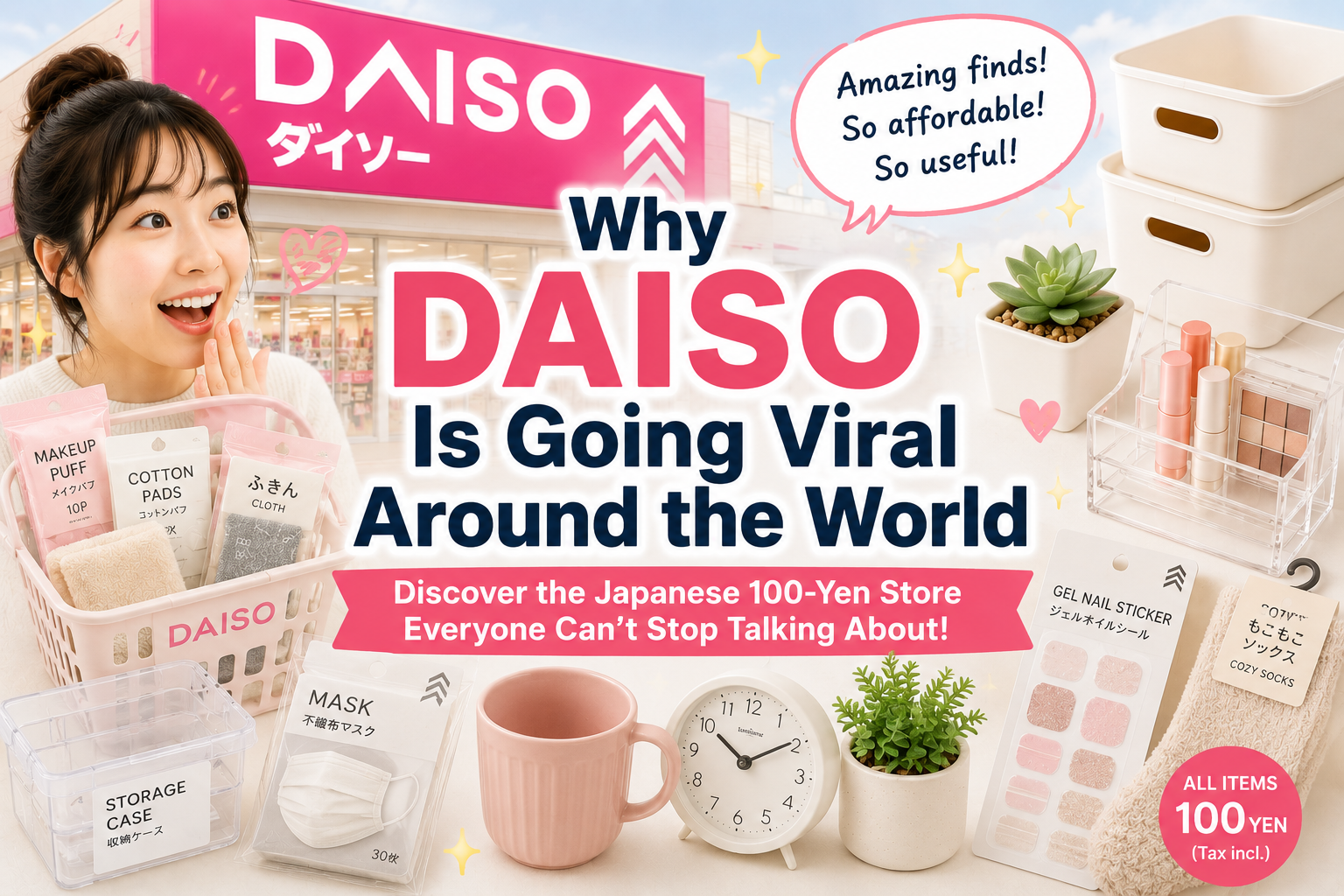
The concept of a one-price shop is not uniquely Japanese, but Japan’s execution of it is. Daiso and Seria, the country’s two dominant hundred-yen shop chains, have created something that visitors from countries with their own discount retail traditions consistently find astonishing: genuinely well-designed, high-quality everyday objects sold at a price point so low it initially reads as a misprint. The global fascination with these stores has grown steadily through social media documentation and shows no sign of slowing.
What Are Japan’s 100 Yen Shops?
Hyaku-en shops, as they are known in Japanese, sell the vast majority of their products at one hundred yen plus tax, currently making each item available for one hundred and ten yen. Daiso, the largest chain with over four thousand domestic locations and significant international presence, carries approximately seventy thousand different product lines. Seria operates a smaller but more design-focused selection that has developed a devoted following among home organisation and lifestyle enthusiasts.
The product range covers essentially every category of everyday life. Kitchen tools, storage solutions, stationery, craft supplies, cleaning products, cosmetics, seasonal decorations, small electronics accessories, gardening equipment, and hobby supplies all appear at the standard price. The breadth creates an environment where visitors typically enter for one item and leave forty minutes later with a basket.
Why International Visitors Are Fascinated
The quality-to-price ratio is the primary driver of international fascination. A kitchen whisk at Daiso performs as well as products sold at three to five times the price in Western countries. A set of storage containers from Seria exhibits the considered design of products from dedicated home goods brands. A collection of drawing tools from either chain rivals equipment from specialist stationery stores at a fraction of the cost.
Japanese design sensibility applies at every price point. This is the core insight that visitors bring home: the aesthetic standards that make Japanese design internationally admired are not reserved for luxury products. They extend into the hundred-yen shop, producing everyday objects that are simply, thoughtfully right in a way that discount retail rarely achieves elsewhere.
Seria’s Design Edge
Seria has developed a particularly strong reputation among design-conscious shoppers. The chain applies a consistent aesthetic across its product lines, favouring neutral palettes, clean forms, and practical elegance that makes Seria products photograph exceptionally well in home organisation and lifestyle content. Japanese home and lifestyle creators regularly use Seria products as the backbone of organisation and decoration projects, generating enormous secondary exposure on Instagram and YouTube.
Seria also produces seasonal collections tied to Japanese holidays and cultural moments that attract collector interest. Cherry blossom season items, summer festival products, and new year goods carry the distinctive Seria design language applied to traditional themes, producing objects that function as both practical items and cultural keepsakes.
Daiso’s Global Reach
Daiso has expanded internationally more aggressively than Seria, with stores in the United States, Australia, Singapore, Thailand, and other markets. However, international Daiso locations carry a narrower selection at higher price points due to import costs and local market conditions. Visiting Japan allows access to the full product range at the original price, including categories and specific items that never reach international stores.
The domestic product development cycle, which produces a continuous stream of new items responding to seasonal and trend-driven demand, means that Japanese Daiso always offers products unavailable through any other channel. Limited seasonal lines and Japan-exclusive items make the store genuinely worth visiting even for international shoppers who have access to their local Daiso.
What to Look For
Certain categories consistently surprise international visitors with their quality. Kitchen tools, particularly silicone cooking implements, Japanese-style chopsticks, and specialised prep tools, represent excellent value by any standard. Stationery, especially from Daiso’s house brands, competes with products from dedicated stationery retailers at a fraction of the price. Storage containers and organisation products in Seria’s neutral aesthetics make practical and visually pleasing additions to any home.
Craft supplies deserve particular attention. Both chains carry materials for traditional Japanese crafts including washi paper, origami supplies, and calligraphy tools alongside contemporary crafting materials. For visitors interested in creative projects, the hundred-yen shop provides extraordinary raw material access.
The Bigger Picture
The international enthusiasm for Japanese hundred-yen shops is ultimately a response to something larger than bargain prices. It is a recognition that a society which applies genuine design care to objects sold for one hundred yen has a different relationship with everyday life than societies where that care is reserved for expensive things. Shopping at Daiso or Seria is not just a transaction but a small lesson in what is possible when quality is treated as a baseline expectation rather than a premium feature.
Plan Your Japan Trip
Ready to visit Japan? Find and book hotels across Japan — from budget guesthouses to luxury ryokan.
