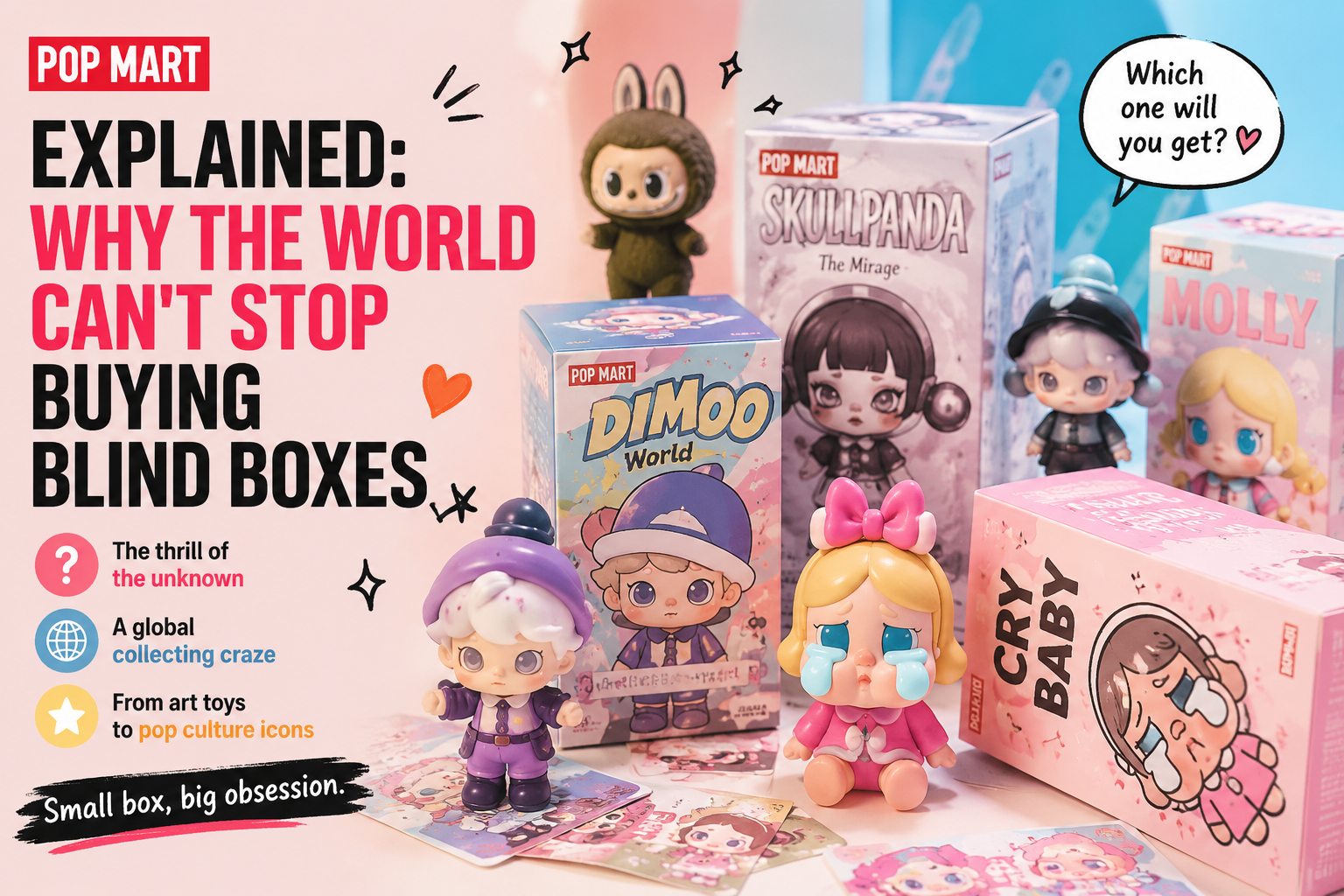
The blind box collectible market has never been more crowded or more exciting. Three names dominate conversations among collectors: Smiski, Sonny Angel, and Labubu. Each has built a devoted following through a combination of distinctive design, the addictive blind box format, and social media communities that make collecting feel like participation in something larger than simply buying a small toy. But they are not interchangeable, and understanding what makes each one distinct helps explain why so many collectors end up with all three.
Smiski – The Glow-in-the-Dark Minimalist
Smiski, made by Japanese company Dreams Inc., is the most conceptually specific of the three. Each figure stands approximately six centimetres tall, glows in the dark, and depicts the character hiding within or perched upon an everyday object. A Smiski hangs off a towel rack. Another peeks over the edge of a bathtub. The series structure is built entirely around this environmental concept, with each new series placing the character in a different domestic setting.
The design is deliberately minimal. Smiski has no mouth, no elaborate costume, and no variation in its basic green-tinged vinyl body. All differentiation comes from pose and placement. This restraint gives Smiski collections an unusual visual cohesion on a shelf, with each figure contributing to a larger implied world rather than standing alone as an individual character study.
Price point: typically 1,500 to 2,000 yen per figure in Japan. Best for collectors who appreciate design-led minimalism and environmental storytelling.
Sonny Angel – The Two-Decade Legacy
Sonny Angel, also from Dreams Inc., has been in continuous production since 2004, making it the elder statesman of this comparison. The formula is elegantly simple: a cherubic baby body, always identical, topped with an endlessly varying headpiece that might be animal ears, a fruit hat, a seasonal theme, or an elaborate fantasy construct. The innocence of the face against the absurdity of the headpiece creates a reliable charm that has proven remarkably durable across changing trends.
Twenty years of production means Sonny Angel has something the others cannot match: a deep back catalogue with significant secondary market value. Early series figures in good condition command prices far above original retail, adding an investment dimension to the collecting experience. This history also means an extensive community of long-term collectors with encyclopedic knowledge of rare variants and production anomalies.
Price point: typically 700 to 1,500 yen per figure in Japan. Best for collectors who value heritage, community depth, and the possibility that early purchases will appreciate over time.
Labubu – The Fashion Accessory
Labubu, from Hong Kong’s Pop Mart, is the disruptive newcomer that has redefined what a blind box collectible can be. Created by artist Kasing Lung and transformed by Pop Mart into a plush bag charm, Labubu occupies a completely different market position than figures designed for shelf display. This is a collectible designed to be worn, carried, and seen in motion alongside real clothing and accessories.
The design makes no concessions to innocence or minimalism. Labubu’s wide toothy grin, pointed ears, and wild expression deliberately reference monster aesthetics, positioning itself as a counterpoint to cuter character types. This edge has proven enormously commercially successful, with global sales exceeding 400 million dollars in the first half of 2025. The celebrity endorsement cycle that Labubu triggered, starting with Lisa of BLACKPINK, continues to drive aspirational associations that fuel both first-time purchases and repeat collecting.
Price point: typically 1,000 to 3,000 yen per figure in Japan depending on series. Best for collectors who want their collectible to function as a visible fashion statement and travel companion.
Which One Should You Buy?
The honest answer is that each serves a different emotional need, which is exactly why many collectors own all three. Smiski appeals to the part of you that appreciates thoughtful design and quiet wit. Sonny Angel appeals to the part of you that values tradition and community and the possibility that a small purchase made today might be worth something significant in a decade. Labubu appeals to the part of you that wants to be seen, that wants your accessories to say something about where your tastes sit in the current cultural conversation.
If you are visiting Japan and can only bring home one, consider what you want it to do. A Smiski will glow quietly on your bedside table and make you smile at 2am. A Sonny Angel will sit on your desk and start conversations with every visitor who notices it. A Labubu will travel the world attached to your bag and appear in every photograph taken of you for the next several years.
None of these is the wrong choice. That is the particular genius of the blind box format: the decision to begin is the only decision that matters, and everything else is a pleasant surprise.
Plan Your Japan Trip
Ready to visit Japan? Find and book hotels across Japan — from budget guesthouses to luxury ryokan.
