Your first stop in Japan should not be a fancy restaurant. It should be a convenience store. Ask any local and they will tell you the same thing: the humble konbini is the single most useful place a first-time visitor can walk into. It feeds you well for under 500 yen, it hands you cash from your foreign card at 3 in the morning, and it quietly solves half the little problems that trip up tourists. This guide covers what you should actually buy, and how to use a Japanese convenience store like someone who lives here.
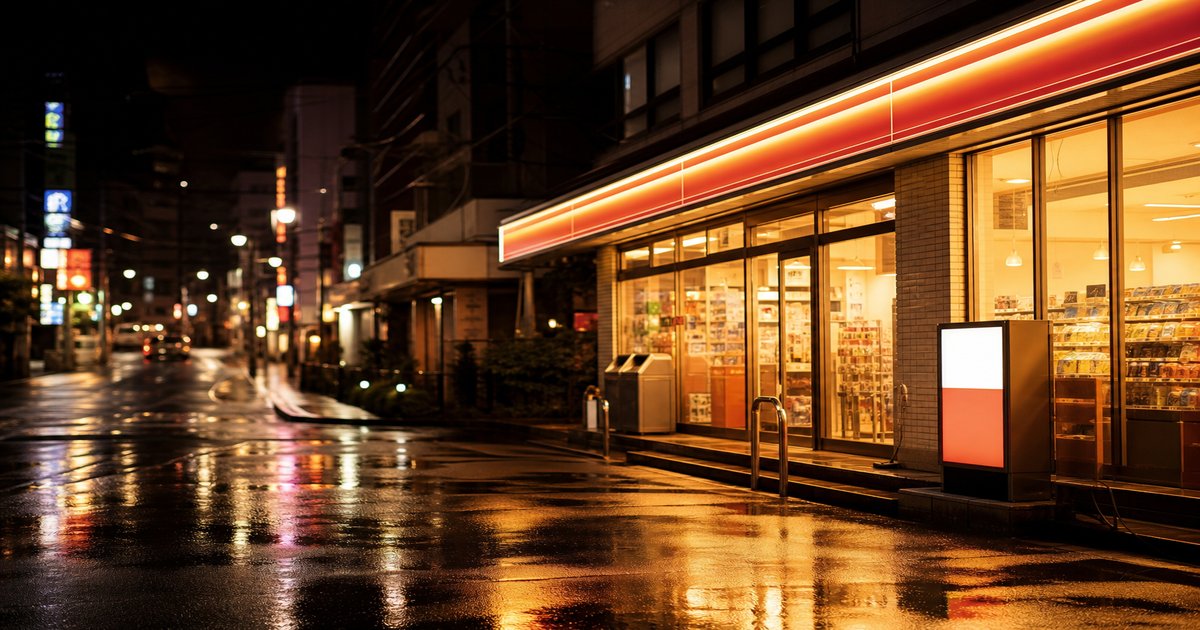
The three chains, and how they differ
7-Eleven, Lawson, and FamilyMart together make up more than 90 percent of the market, and each one has its own personality and its own die-hard fans. You will never be far from at least one of them in any city. The good news for a traveler is that you do not need to pick a favorite. Wander into whichever is closest and you will find nearly everything below.
Food you should actually buy
The fried chicken trio
Every chain has a signature piece of hot fried chicken kept by the register, and locals genuinely argue about which is best. Lawson sells Karaage-kun, a box of bite-sized nuggets that has become a national obsession. FamilyMart has FamiChiki, widely considered the crispiest of the three. 7-Eleven leans on quality ingredients. Each costs only a couple of hundred yen and is handed to you hot. Try all three across your trip and pick your own winner.
Onigiri, the perfect walking breakfast
These triangular rice balls wrapped in crisp seaweed cost around 120 to 180 yen and come in dozens of fillings: tuna mayo, grilled salmon, pickled plum, and mentaiko spicy cod roe among them. Here is the trick that catches out almost every first-timer. Do not tear the plastic open randomly. There is a numbered opening sequence printed on the wrapper, usually 1, 2, 3, that keeps the seaweed crisp and separate from the rice until the moment you bite in. Follow the numbers and it comes together perfectly.
Bento boxes and the magic words
Pre-made bento boxes run around 400 to 700 yen and cover everything from katsu curry to hamburger steak to yakitori. They are meant to be eaten warm, so hand yours to the cashier and they will microwave it for you. A polite gesture toward the box and a simple please is enough if your Japanese is limited.
Coffee and dessert that punch above their price
Konbini coffee in Japan is genuinely excellent and almost absurdly cheap, at roughly 110 to 150 yen for a freshly ground cup from the machine. Seven Cafe at 7-Eleven is consistently rated among the best. Pair it with a dessert: Lawson is famous for its cream puffs, 7-Eleven for its roll cake, and FamilyMart for seasonal ice cream. Quality is remarkably high for the price.
The konbini as your travel toolkit
The food is only half the reason locals rely on these stores. The other half is a stack of services that solve real travel problems.
- Cash from a foreign card, any hour. More on this below, but the ATM inside is often your best friend in a cash-friendly country.
- Ticket machines. The in-store terminals, Loppi at Lawson, the multi-copy machine at 7-Eleven, and the FamilyMart terminal, let you buy and print tickets for concerts, sports, and theme parks including Disney and Universal Studios Japan.
- Luggage forwarding. Instead of dragging a heavy suitcase across the country, drop it at almost any konbini and send it ahead to your next hotel through Yamato Transport. Staff help you fill out the form, you pay somewhere around 1,500 to 2,500 yen, and your bag arrives the following day.
- Clean toilets, free wifi, and a place to pause. Most stores let you use the restroom, and many offer free wifi. On a long sightseeing day this matters more than you expect.
Getting cash: the ATM tip that saves your trip
Japan still loves cash, and the easiest place to get it with a foreign card is the Seven Bank ATM inside 7-Eleven. There are more than 20,000 of them, they run 24 hours a day all year, and the screen switches into 12 languages including English, Chinese, Korean, Thai, Vietnamese, French, and Portuguese. They accept Visa and Plus, Mastercard, Maestro and Cirrus, UnionPay, American Express, JCB, Discover, and Diners Club, and you can take out up to 100,000 yen in a single withdrawal.
A few practical notes. Fees are small: a Visa withdrawal is typically 110 yen up to 10,000 yen and 220 yen above that, while Seven Bank waives its own operator fee entirely for many foreign Mastercard and Maestro cards. As of June 2026, FamilyMart has also begun rolling out its own Famima ATM, serviced by Seven Bank, so your options are only growing. One thing to do before you fly: tell your bank you will be using your card in Japan. Many banks automatically block a card the first time it is used abroad because they suspect fraud, and there are few worse feelings than standing at a working ATM with a card that your own bank has frozen.
Small etiquette that makes you look like a regular
None of this is required, but it smooths things out. Take a paper spoon or chopsticks only if you need them, since staff often ask. Sort your trash into the bins by the entrance rather than leaving it on a counter. And if you buy a hot drink and a cold item together, do not be surprised when the cashier bags them separately. It is care, not fuss.
The bottom line
Treat the convenience store as your base camp rather than a last resort. Grab breakfast for a few hundred yen, pull the cash you need for the day, forward your suitcase to the next city, and print your theme park tickets, all before 9 in the morning. Do that once and you will understand why, for people who actually live in Japan, the konbini is not a backup plan. It is the plan.
PR
Plan This Trip With Fewer Last-Minute Costs
Hotel prices around Japan can change quickly. Compare stays early, then check the travel gear checklist before you pack.
How This Guide Was Reviewed
This article was reviewed on July 26, 2026 to reduce generic travel advice and make the page more useful before booking. Prices, opening rules, ticket windows, transport details, and affiliate availability can change, so verify official sources before final plans.
