PR / TRIP PLANNING
Make Kyoto easier by choosing the right base
Food markets, early shrine visits, and crowded train routes are much smoother when your hotel area matches your first stop.
What to Eat First
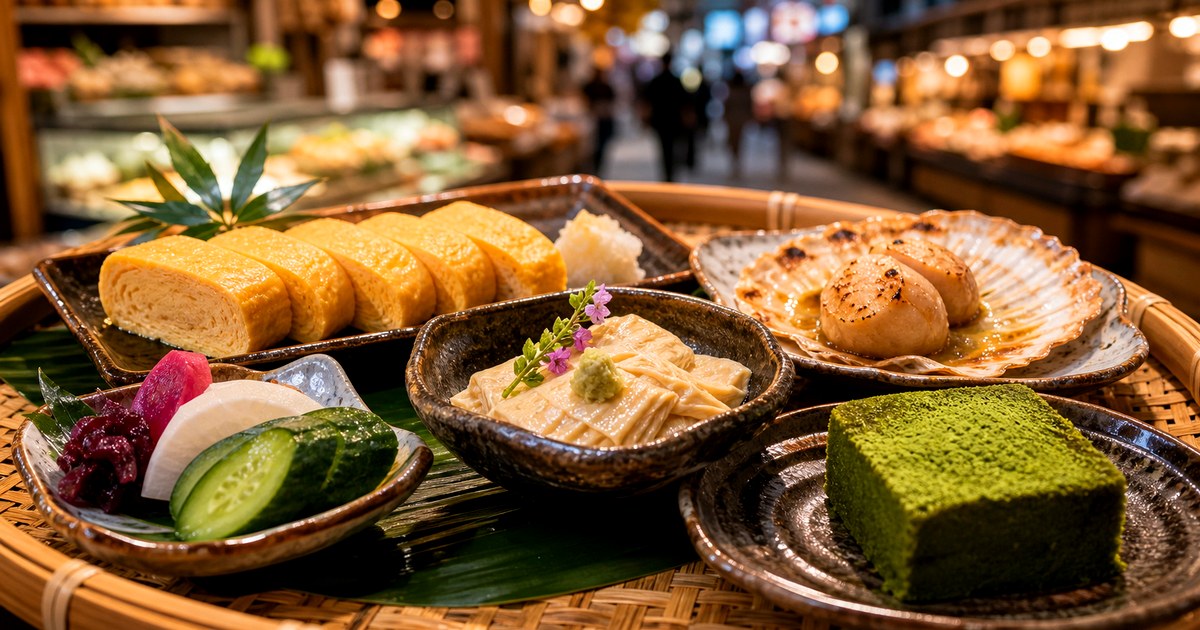
Nishiki Market is known as Kyoto’s kitchen, and the best foods are the ones connected to local ingredients. Start with tamagoyaki, a sweet rolled omelet often sold in small portions. It is easy to eat, affordable, and very Kyoto-friendly. Expect small snacks to cost around 300 to 700 yen depending on the shop.
Next, try tsukemono, Japanese pickles. Kyoto pickles are famous, and many shops offer small tasting pieces or packed sets. These are especially good if you are staying in an apartment-style hotel and want something to eat with rice. Yuba, or tofu skin, is another Kyoto specialty. It may appear as a skewer, croquette, or soft dish depending on the shop.
Seafood is also popular. Look for grilled scallops, eel, octopus, or small fish items. Prices vary widely, so check before ordering. For sweets, matcha warabi mochi, dango, and seasonal fruit skewers are easy choices. The best answer to nishiki market kyoto what to eat is not “everything.” Pick five or six small items and leave room for a proper meal later.
What to Skip
Skip anything that looks like generic tourist food with inflated prices. Some wagyu skewers, giant seafood items, and colorful snacks may be fun, but they are not always the best value in Kyoto. If the same item appears every few meters and costs more than a normal lunch, pause before buying.
Also skip eating while walking. Nishiki Market has become stricter about manners because the street is narrow and crowded. Many shops prefer customers to eat in front of the store or in designated areas. If you buy a snack, ask where to eat it. This keeps the market cleaner and avoids annoying local shoppers.
Do not fill up only on sweets. Nishiki is more interesting when you mix savory, pickled, tofu-based, seafood, and dessert items. If you only buy matcha sweets, you miss the actual Kyoto food culture.
Best Time to Go
Most shops open around 9:00 or 10:00 a.m. and many start closing around 5:00 or 6:00 p.m., though hours vary by shop. Some close on Wednesdays or irregular days. The best time is around 10:00 to 11:30 a.m. on a weekday. Shops are open, but the worst lunch crowd has not fully arrived.
Late afternoon can be good for atmosphere, but some popular items may sell out. Weekends and holidays can be very crowded. The market is about 400 meters long, but walking through it can take longer than expected when crowds are heavy.
If you want to avoid the slowest crowd movement, enter from the west side near Takakura Street and walk east toward Teramachi. Many visitors drift in from nearby shopping streets, so movement can bottleneck around popular snack shops. Do not be afraid to leave the arcade for a side street and return later. Nishiki is central enough that you can pause easily instead of pushing through shoulder-to-shoulder traffic.
Access is easy from Shijo Station, Karasuma Station, Kawaramachi, or Gion-Shijo depending on your route. It pairs well with Teramachi Shopping Street, Pontocho, or Gion, but do not try to rush all of central Kyoto in one afternoon.
For a food-focused half day, start with Nishiki Market, then walk to Nishiki Tenmangu Shrine at the eastern end, continue into Teramachi, and finish near Pontocho for dinner. This route keeps food, shopping, and atmosphere close together. It also prevents the common mistake of eating too many random snacks and then being too full for Kyoto’s better sit-down restaurants.
Tips and Warnings
Bring cash. Many shops accept cards or digital payments now, but small purchases are still easier with coins and 1,000 yen notes. Carry a small trash bag because public bins can be limited. Do not touch food unless the shop invites you to sample it.
If you have allergies, be cautious. Sauces may contain soy, fish, shellfish, wheat, or sesame, and English labels are not always detailed. Vegetarians should ask carefully because tofu or vegetable-looking foods may use fish-based dashi.
For the best nishiki market kyoto what to eat plan, set a budget before entering. Around 2,000 to 3,500 yen per person is enough for several snacks without going wild. If you want a sit-down meal, use Nishiki as an appetizer route, not the whole lunch.
Final Verdict
Nishiki Market is worth visiting if you go with a plan and good manners. Eat Kyoto-specific foods, skip generic expensive snacks, go before lunch, and avoid blocking the narrow street. For first-timers asking nishiki market kyoto what to eat, the best strategy is variety: one egg item, one pickle, one tofu or yuba item, one seafood snack, and one sweet.
How This Guide Was Reviewed
This article was reviewed on July 26, 2026 to reduce generic travel advice and make the page more useful before booking. Prices, opening rules, ticket windows, transport details, and affiliate availability can change, so verify official sources before final plans.
