PR / TRIP PLANNING
Make Kyoto easier by choosing the right base
Food markets, early shrine visits, and crowded train routes are much smoother when your hotel area matches your first stop.
What It Feels Like After Dark
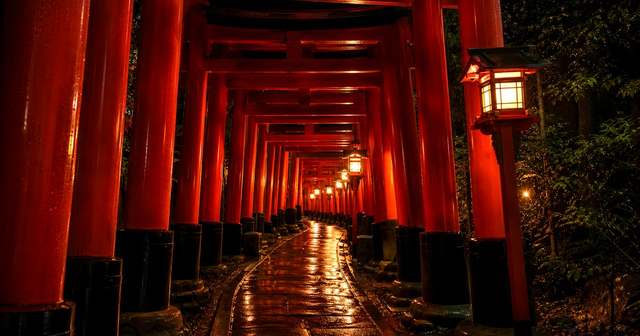
Fushimi Inari is completely different at night. During the day, the famous red torii gates can be packed with tour groups and selfie lines. After sunset, the crowds thin out and the shrine becomes quieter, more atmospheric, and a little mysterious. Lanterns and limited lighting make the lower paths easy to follow, but the mountain sections can feel isolated.
The lower area near the main gate, main hall, and Senbon Torii is the best choice for most visitors. You can get the night atmosphere without committing to the full mountain hike. The full route up Mount Inari can take around 2 hours in daylight. At night, it may take longer because you will move more carefully.
Fushimi Inari at night is not a horror experience, but it is still a mountain shrine. Expect insects in warm months, uneven steps, occasional wildlife sounds, and fewer people the higher you go.
Access, Hours, and Cost
Fushimi Inari Taisha is in Fushimi Ward, Kyoto. Address: 68 Fukakusa Yabunouchicho, Fushimi Ward, Kyoto. The nearest JR stop is Inari Station on the JR Nara Line, about 5 minutes from Kyoto Station by train. The shrine is also a short walk from Fushimi-Inari Station on the Keihan Main Line.
The shrine grounds are open 24 hours, and entry is free. Trains are not 24 hours, so check your last train if you are visiting late. A taxi back to central Kyoto can cost several thousand yen depending on your destination, so do not assume you can stay until midnight without transport planning.
If you are staying near Kyoto Station, the JR route is easiest. If you are coming from Gion, Sanjo, or Osaka on the Keihan Line, Fushimi-Inari Station may be more convenient.
How Far Should You Walk?
For most travelers, the best night route is the lower shrine area plus the first torii tunnels. This gives you the famous photos and atmosphere in 30 to 60 minutes. If you continue upward, you will reach viewpoints and smaller shrine areas, but lighting becomes more uneven and the walk is more tiring.
If you want a safer compromise, visit around sunset. Arrive while there is still daylight, walk partway up, then come down as the lanterns turn on. This gives you both visibility and atmosphere. It also reduces the chance of getting confused on side paths.
Travelers who want photos should understand that night photography is harder than daytime photography. A phone can handle the lower torii area, but darker sections may look blurry unless you keep still. A small tripod may bother other visitors on narrow paths, so use it only where it does not block anyone. The goal is to enjoy Fushimi Inari at night, not turn the shrine into a photo studio.
Solo travelers should be honest about their comfort level. Fushimi Inari at night can be peaceful, but if an empty mountain path makes you anxious, stay in the lower area.
If you are visiting after dinner in Gion or central Kyoto, check train routes before you drink alcohol. The JR Nara Line and Keihan Line are both convenient, but late-night service becomes less frequent. A good practical plan is to arrive around 8:00 p.m., spend 45 to 75 minutes in the lower shrine area, and return before the last-train window becomes stressful.
Tell someone your plan if you go alone, especially if you intend to walk above the lower shrine area.
Tips and Warnings
Wear real walking shoes. The path includes stairs, slopes, and stone surfaces that can be slippery after rain. Bring a small flashlight or use your phone light only when needed. Do not disturb prayer areas, climb on gates, or take flash photos in people’s faces.
Do not feed animals. Do not wander into dark side trails. If you are visiting in summer, bring insect repellent. If you are visiting in winter, bring a warm layer because the mountain feels colder than central Kyoto streets.
For photos, be patient and use lower brightness settings. The red gates look beautiful at night, but long photo sessions can block the path. Step aside when other visitors pass.
Final Verdict
Fushimi Inari at night is worth it if you want fewer crowds and a stronger shrine atmosphere. Stay near the lower torii if you want an easy visit, and only hike higher if you are prepared for darkness, stairs, and quiet paths. It is safe for careful travelers, but not a place to treat casually.
How This Guide Was Reviewed
This article was reviewed on July 26, 2026 to reduce generic travel advice and make the page more useful before booking. Prices, opening rules, ticket windows, transport details, and affiliate availability can change, so verify official sources before final plans.
