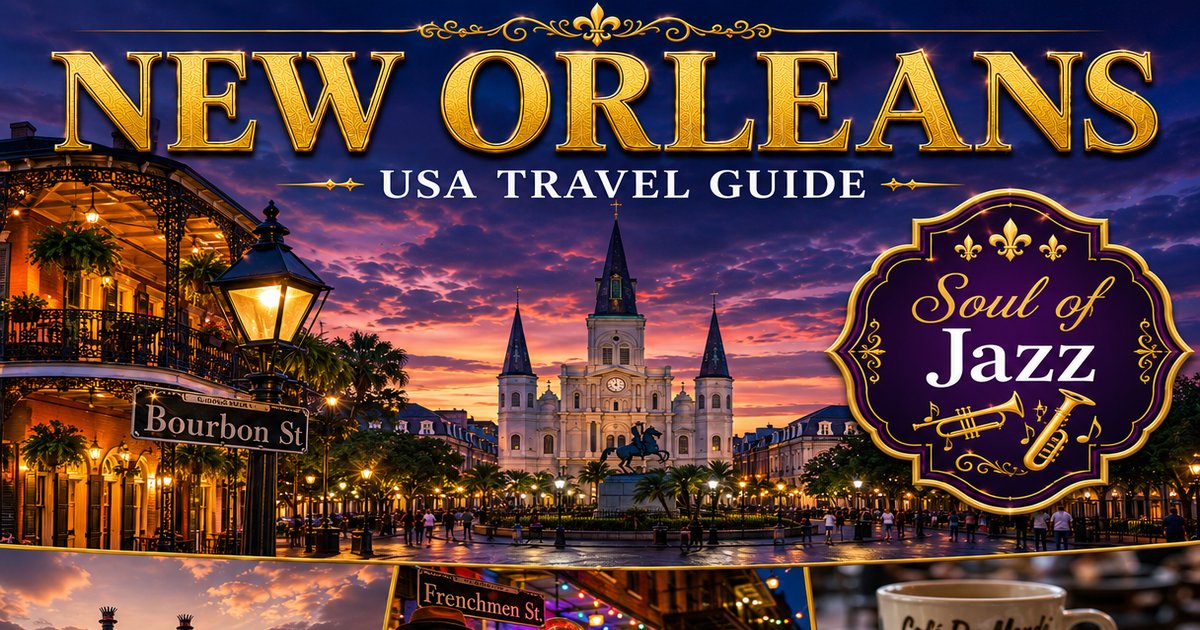
New Orleans is America’s most unique and soulful city — a place where French, Spanish, African, and Caribbean cultures collided over three centuries to create something entirely its own. The jazz that was born here changed all of world music. The food — Creole and Cajun — is unlike anything else in America. The city’s spirit of celebration, embodied in Mardi Gras and the constant soundtrack of live music, is infectious and irresistible.
Top Attractions
1. The French Quarter
The Vieux Carré (Old Square) is the heart of New Orleans — 13 blocks of Spanish Colonial architecture, iron-lace balconies, and streets perpetually alive with music. Bourbon Street’s raucous nightlife is famous worldwide, but the real magic is in the quieter streets: Royal Street’s antique shops and galleries, Frenchmen Street’s live jazz clubs, and Jackson Square with its portrait artists and street performers surrounding the magnificent St. Louis Cathedral.
2. Music
New Orleans is the birthplace of jazz, and music fills every corner of the city every night of the week. Frenchmen Street in the Marigny neighborhood is where locals go — a strip of intimate clubs (Spotted Cat, Blue Nile, d.b.a.) with world-class live jazz, blues, and funk. The Preservation Hall, operating since 1961, is the temple of traditional New Orleans jazz. The New Orleans Jazz & Heritage Festival each spring is one of America’s greatest music events.
3. Food Culture
New Orleans cuisine is a national treasure. Beignets dusted with powdered sugar at Café Du Monde, po’boys stuffed with fried oysters or shrimp, muffulettas from Central Grocery, crawfish étouffée, red beans and rice on Mondays (a city tradition), and gumbo — every meal in New Orleans is a celebration. Commander’s Palace, Dooky Chase’s, and Galatoire’s are among America’s great historic restaurants.
4. Garden District & Beyond
The Garden District’s antebellum mansions — seen from the historic St. Charles streetcar — represent the grandeur of 19th-century New Orleans. The above-ground cities of the dead (St. Louis Cemetery No. 1) reflect the city’s French and Spanish heritage and unique relationship with death. The bayous and swamps beyond the city offer extraordinary wildlife, including alligators and ancient cypress forests.
Best Time to Visit
- Mardi Gras (Feb–Mar): The greatest street party in America — book a year in advance
- Jazz Fest (Apr–May): Two weekends of the world’s best music and food
- Autumn (Oct–Nov): Cooler weather, Halloween celebrations, fewer crowds
- Summer (Jun–Sep): Extremely hot and humid, but hotel prices are lowest
Travel Tips
The French Quarter is walkable; the St. Charles streetcar connects to Uptown and the Garden District cheaply. Carry cash for smaller music clubs. Drink responsibly — open containers are legal on the street, but the heat accelerates alcohol’s effects. Book accommodation well in advance for Mardi Gras and Jazz Fest.
