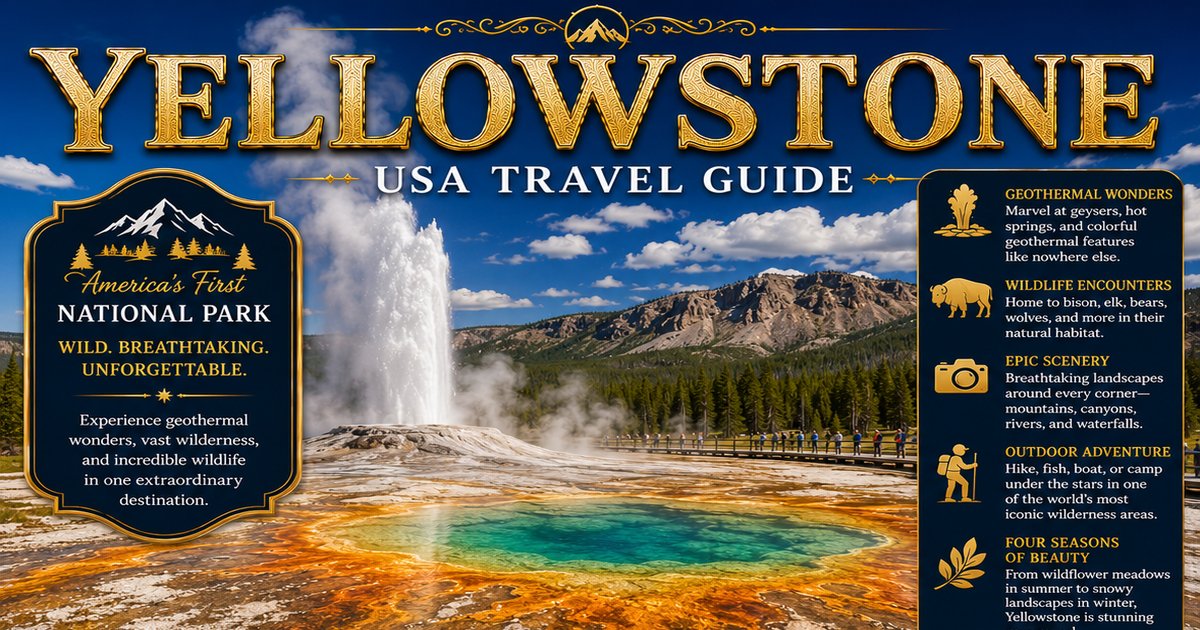
Yellowstone is America’s — and the world’s — first national park, established in 1872 and unlike anywhere else on earth. Sitting atop one of the world’s largest active supervolcanoes, Yellowstone is a geological wonderland of geysers, hot springs, mud pots, and fumaroles, set within a vast wilderness of forests, rivers, and meadows that supports the most diverse and intact large-mammal ecosystem in North America outside of Africa.
Top Attractions
1. Old Faithful & Geyser Country
Old Faithful is the world’s most famous geyser — erupting approximately every 90 minutes to heights of 100-180 feet for 1.5-5 minutes. But Old Faithful is just one of over 500 active geysers in Yellowstone (more than exist in all the rest of the world combined). The Upper Geyser Basin walk reveals Castle Geyser, Grand Geyser, and dozens of other active hydrothermal features in a landscape that feels genuinely otherworldly.
2. Grand Prismatic Spring
The Grand Prismatic Spring — the largest hot spring in the United States and the third largest in the world — is Yellowstone’s most iconic and photographed feature. Its brilliant rainbow colors (deep blue center through green, yellow, orange, and red rings) are produced by heat-loving microbial mats living at different temperature bands around the spring’s edge. The Fairy Falls trail provides an elevated overlook for the classic aerial perspective.
3. Wildlife
Yellowstone supports the largest concentration of mammals in the lower 48 states. The Lamar Valley — “America’s Serengeti” — offers the best wildlife viewing, with bison herds, wolf packs (reintroduced in 1995), grizzly bears, black bears, elk, pronghorn, and bald eagles all regularly visible from the road. Early morning and evening are the best times; bring binoculars. The Hayden Valley offers similar opportunities with different terrain.
4. Grand Canyon of Yellowstone
The Yellowstone River carved a spectacular yellow-and-orange canyon through the park’s volcanic rhyolite rock. The Lower Falls (308 feet — twice the height of Niagara) thunders into the canyon below. Artists Point offers the classic view. The South Rim Trail and the Uncle Tom’s Trail (328 steel steps descending 600 feet) provide dramatic close-up perspectives.
Best Time to Visit
- Summer (Jun–Aug): All roads open, best wildlife activity, crowded but spectacular
- Spring (Apr–May): Newborn wildlife, fewer crowds, some roads still closed
- Autumn (Sep–Oct): Elk rut, fall colors, dramatically reduced crowds — best season for many visitors
- Winter (Nov–Mar): Snowcoach and snowmobile access only; the park is transformed into a magical winter wilderness
Travel Tips
Book accommodation and campsite reservations 6+ months in advance — Yellowstone fills completely in summer. Stay at least 3 days to see all five districts. Keep a safe distance from all wildlife: 25 yards from bison and elk, 100 yards from bears and wolves. The figure-eight Grand Loop Road (142 miles) connects the main attractions — plan your route by district.
