New Zealand evolved for 80 million years in complete isolation — without land mammals. Birds filled every ecological niche, producing a fauna unlike anywhere else on Earth: flightless giants, nocturnal parrots, and the smallest penguins. Today, intensive conservation efforts are bringing many of these unique species back from the brink of extinction.
Star Birds
Kiwi
New Zealand’s iconic Kiwi — a flightless, nocturnal bird with nostrils at the tip of its long bill — is the country’s national symbol. The best way to see wild kiwi is on a guided night walk in Northland, Stewart Island, or the Coromandel. Zealandia Wildlife Sanctuary in Wellington offers nocturnal encounters in a predator-free sanctuary.
Kea
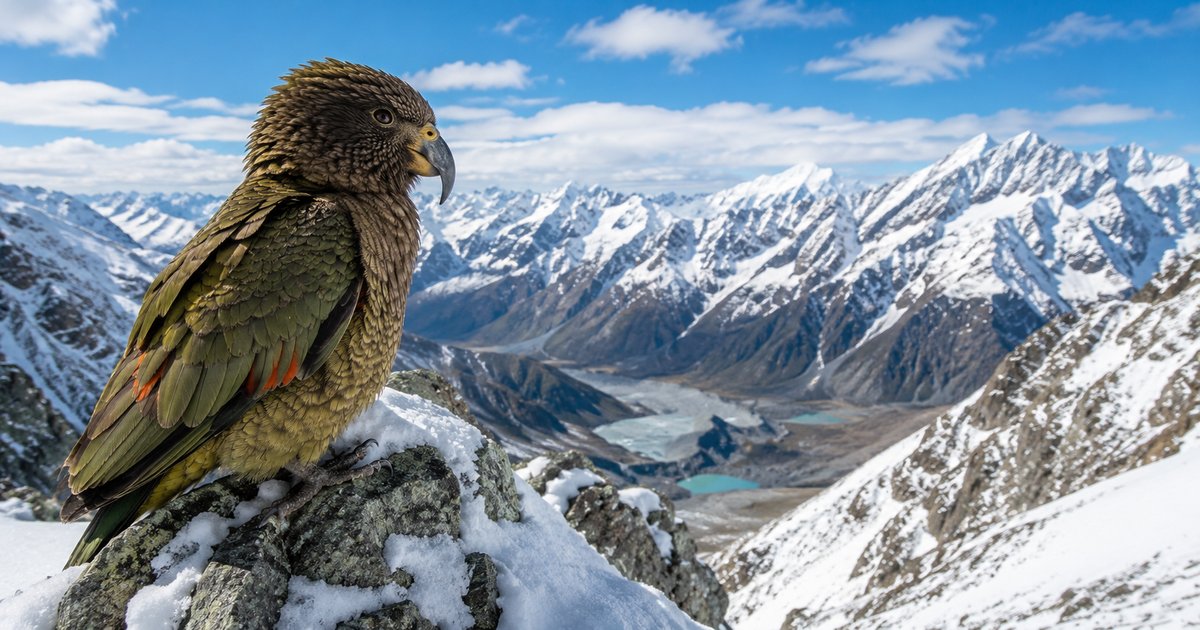
The Kea is the world’s only alpine parrot — a brilliantly intelligent bird with olive-green plumage and flame-orange underwings. It inhabits the Southern Alps of the South Island, where its mischievous personality (it dismantles cars for fun) has made it both beloved and challenging for tourism operators.
Little Penguin
The Little Penguin (Blue Penguin) — the world’s smallest penguin — returns to coastal colonies at dusk after a day fishing at sea. The famous Penguin Parade at Phillip Island, Australia, and similar experiences at Oamaru and Pohatu in New Zealand offer magical evening encounters.
Best Time to Visit
- Oct-Feb: Summer; seabird breeding; Kea active; accessible mountain roads
- Mar-May: Autumn; fewer tourists; bird activity continues
- Jun-Aug: Winter; Kea congregate at ski resorts; quieter wilderness areas
Travel Tips
Auckland (North Island) and Christchurch (South Island) are the main gateways. Hire a car to access remote birding sites. The Chatham Islands (requiring a small charter flight) hold several endemic species including Black Robin, one of the rarest birds on Earth after a famous conservation story.
