Manu National Park in southeastern Peru encompasses a complete altitudinal gradient — from Andean highlands at 4,000 metres down through cloud forest to Amazon lowland jungle — creating the most biodiverse protected area on Earth. Over 1,000 bird species have been recorded here, representing more than 10% of all bird species worldwide in a single national park.
Star Birds
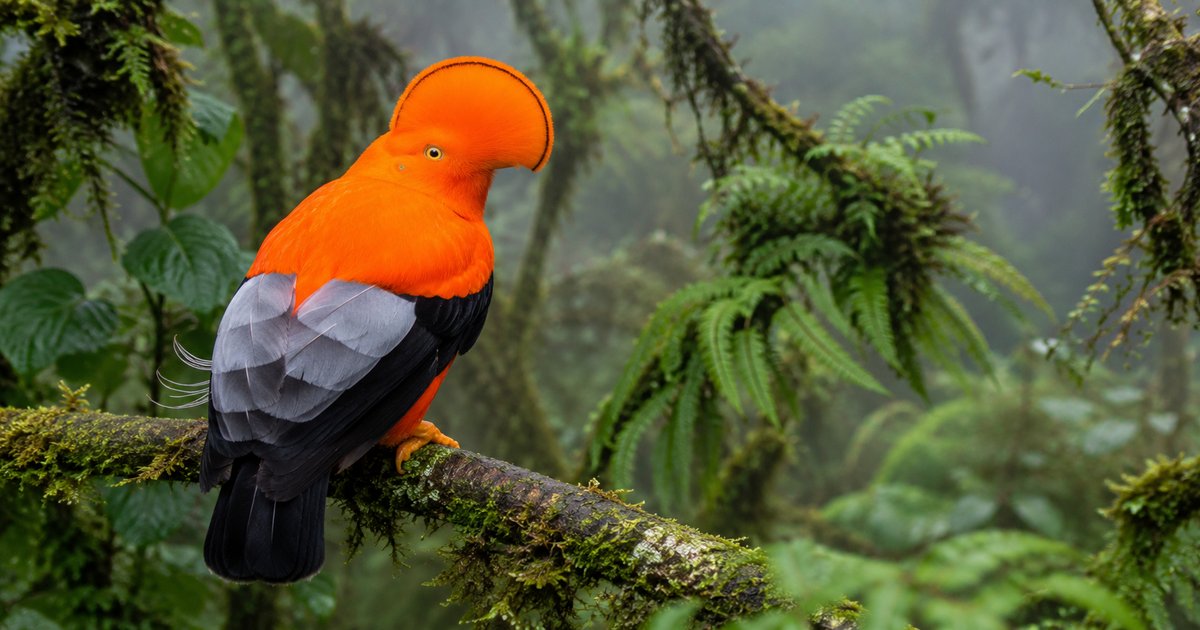
Andean Cock-of-the-Rock
The Andean Cock-of-the-Rock — one of South America’s most spectacular birds, in brilliant flame-orange — performs competitive lek displays in cloud forest clearings at dawn. Dedicated hides at traditional lek sites near Pilcopata allow intimate observation of males displaying to watching females.
Macaw Clay Lick at Blanquillo
The Blanquillo clay lick on the lower Manu River is South America’s most famous macaw spectacle. At dawn, hundreds of Red-and-green Macaws, Blue-and-yellow Macaws, Scarlet Macaws, Chestnut-fronted Macaws, and several parrot species arrive to consume mineral-rich clay. The noise, colour, and chaos is overwhelming.
Harpy Eagle
The Harpy Eagle — the Amazon’s apex aerial predator — is regularly seen at specific nest sites within the park. A nesting pair in the lowland forest has attracted birders from around the world. Seeing this enormous eagle at its nest represents a birding pinnacle.
Best Time to Visit
- May-Oct: Dry season; easier forest access; comfortable conditions
- Nov-Apr: Rainy season; fruits abundant; some areas difficult to access
Travel Tips
Cusco is the gateway city, connected internationally via Lima. The Manu Road from Cusco to Salvacion passes through three distinct climate zones in a single day’s drive — extraordinary birding throughout. Only limited visitor access is permitted into the core zone. Specialist tour operators with experienced Manu guides are essential.
