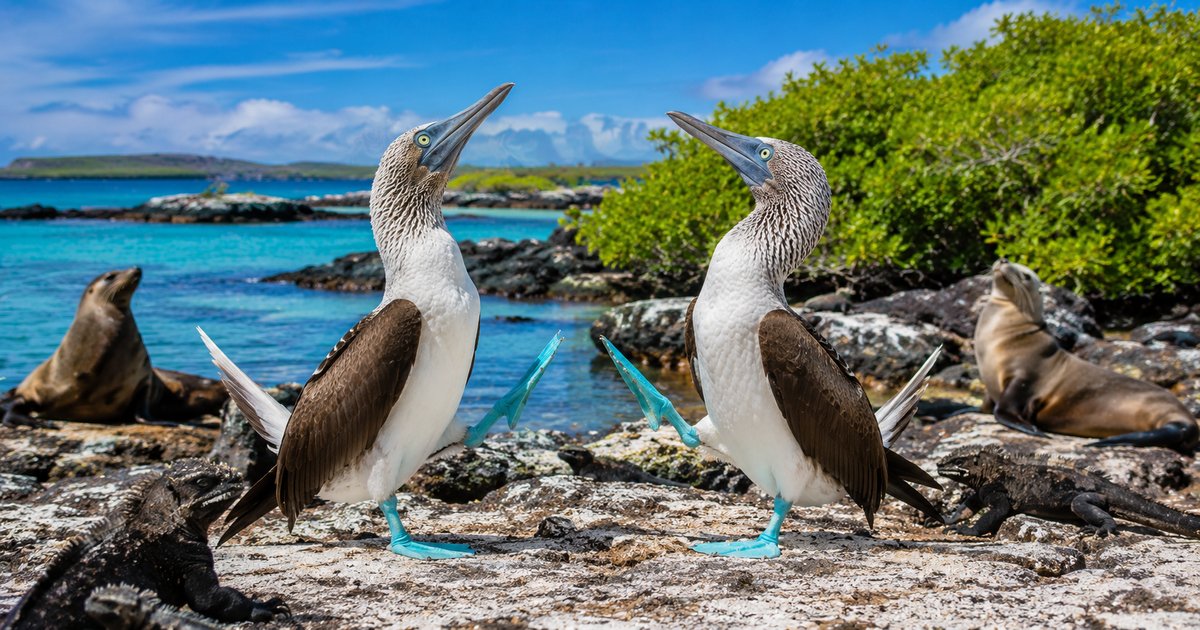
The Galapagos Islands of Ecuador are the undisputed pinnacle of wildlife travel — a volcanic archipelago where evolution proceeded in glorious isolation and where wild animals have no fear of humans. For birders, the Galapagos offers encounters with species found nowhere else on Earth, from dancing Blue-footed Boobies to the iconic Darwin’s Finches that changed our understanding of life itself.
Star Birds
Blue-footed Booby
The Blue-footed Booby performs its elaborate courtship dance — raising brilliant turquoise feet to impress a mate — with complete indifference to human observers standing metres away. Colonies on Espanola, North Seymour, and San Cristobal offer unforgettable close-range encounters.
Magnificent Frigatebird
Male Magnificent Frigatebirds inflate enormous scarlet throat pouches during the breeding season on North Seymour. Colonies of hundreds of nesting birds fill the palo santo trees with their aerial displays.
Galapagos Penguin
The Galapagos Penguin — the world’s only penguin living in tropical waters — breeds year-round on Fernandina and Isabela. Snorkeling alongside penguins is one of the archipelago’s great experiences.
Darwin’s Finches
The 15 species of Darwin’s Finches, each adapted to different ecological niches, are best observed on Santa Cruz. The Woodpecker Finch famously uses cactus spines as tools to extract insects from bark.
Best Time to Visit
- Dec-May: Warm season; calm seas; Blue-footed Boobies nesting; Waved Albatross absent
- Jun-Nov: Cool season; Waved Albatross present on Espanola; better snorkeling visibility
Travel Tips
All visitors must join a licensed naturalist-guided tour — either a liveaboard cruise or island-based with day trips. Puerto Ayora (Santa Cruz) is the main hub. Flights arrive from Quito and Guayaquil. The entrance fee is paid on arrival. Advanced booking is essential as visitor numbers are strictly controlled.
