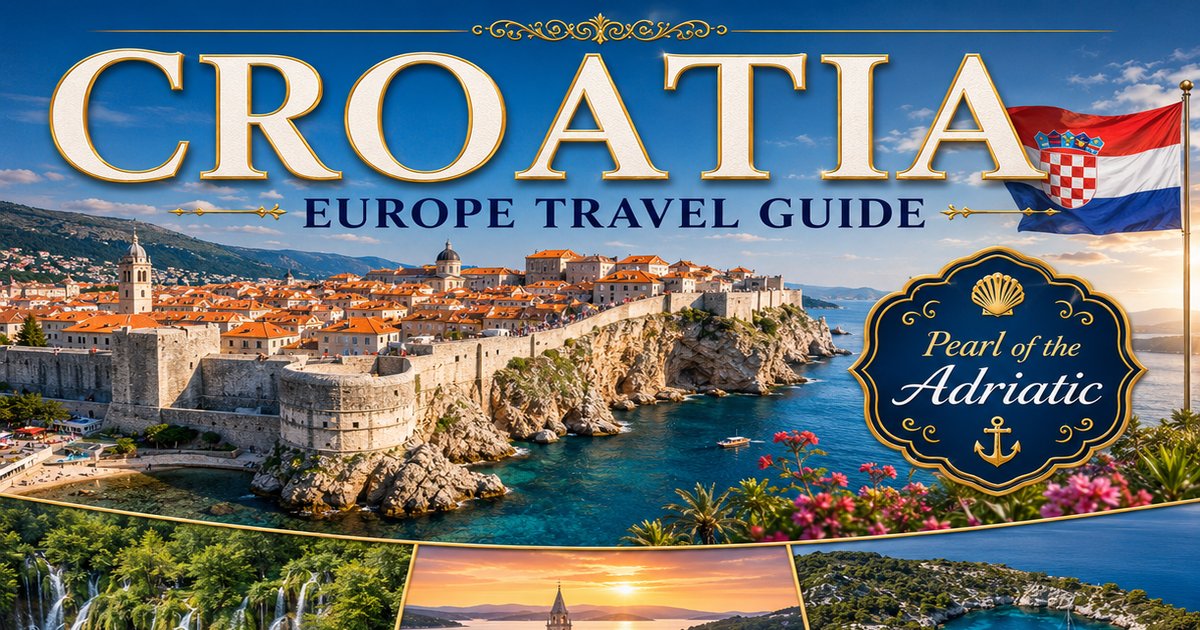
Croatia is one of Europe’s most beautiful countries — a long, dramatic Adriatic coastline studded with over 1,000 islands, backed by limestone mountains and medieval walled cities. Dubrovnik, Plitvice Lakes, Split, and the island of Hvar have made Croatia one of Europe’s top destinations.
Top Destinations
1. Dubrovnik
The “Pearl of the Adriatic” — a perfectly preserved medieval walled city on a rocky promontory above the crystalline Adriatic — is one of Europe’s most extraordinary sights. Walking the 2km circuit of its walls and watching the sunset turn the limestone streets gold are essential experiences.
2. Plitvice Lakes National Park
A UNESCO World Heritage natural wonder — 16 terraced lakes connected by cascading waterfalls, their colors shifting from azure to green depending on the light. Wooden boardwalks wind through the cascades and forests.
3. Split & Diocletian’s Palace
Split is unique in Europe — a living city built within a Roman emperor’s retirement palace from 300 CE. Its courtyards now contain restaurants, bars, and apartments — a city within an ancient palace.
4. Hvar & the Dalmatian Islands
Hvar Island — with its lavender fields, Venetian-era fortifications, and crystal-clear coves — is Croatia’s most celebrated island. Brač, Vis, and Korčula offer quieter alternatives.
Food & Drink
Dalmatian cuisine features fresh Adriatic seafood, Peka (lamb slow-cooked under a bell), Crni Rižot (black risotto), and local olive oils. Croatian wines — Plavac Mali and Pošip — are excellent and underrated.
Best Time to Visit
- Spring (May–Jun): Warm, uncrowded, lavender blooming
- Autumn (Sep–Oct): Still warm, crowds gone, lower prices
Travel Tips
Book Dubrovnik accommodation months in advance. The Jadrolinija ferry network connects the islands. Croatia uses the Euro since 2023.
