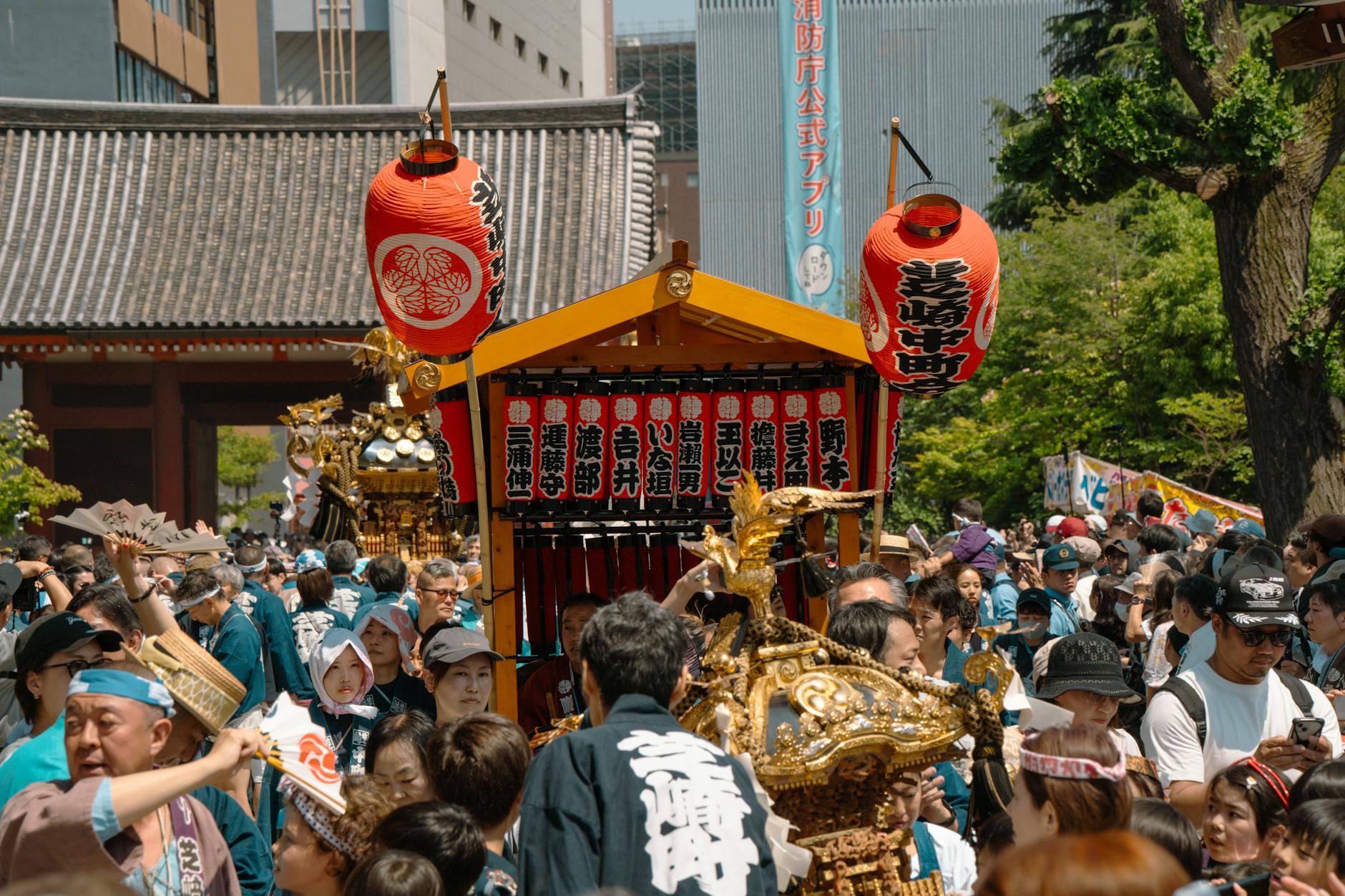
Japanese festivals, called matsuri, are among the most spectacular and culturally rich public celebrations anywhere in the world. Rooted in Shinto and Buddhist traditions, these events take place throughout the year at shrines and temples across the country, ranging from neighborhood gatherings of a few hundred people to massive national events drawing millions of visitors over several days.
Spring Festivals
The Sanja Matsuri at Asakusa Shrine in Tokyo, held in mid-May, is one of Tokyo’s three great festivals and one of the largest Shinto festivals in the country. Over the course of a weekend, enormous portable shrines called mikoshi are carried through the streets of Asakusa by teams of participants in traditional clothing, accompanied by taiko drums and flutes. The Hollyhock Festival, or Aoi Matsuri, in Kyoto takes place on May 15th and features an elegant imperial procession in ancient court dress through the streets between the Imperial Palace and Shimogamo and Kamigamo Shrines.
Summer Festivals
The Gion Matsuri in Kyoto, held throughout July with the main procession on July 17th, is widely considered one of Japan’s three greatest festivals. Enormous decorated floats called yamaboko, some standing over 25 meters tall, are paraded through central Kyoto streets in an event that has continued virtually uninterrupted for over 1,000 years. The Awa Odori festival in Tokushima on Shikoku Island, held in mid-August, transforms the city into an enormous outdoor dance performance as thousands of performers in traditional costume dance through the streets accompanied by traditional music.
Autumn Festivals
The Jidai Matsuri in Kyoto on October 22nd celebrates the founding of the city with a historical procession featuring over 2,000 participants in costumes representing each era of Kyoto’s history from the 8th century to the late 19th. The Kurama Fire Festival on the same evening features participants carrying enormous flaming torches through the small mountain village of Kurama north of Kyoto.
Winter Celebrations
The Sapporo Snow Festival in Hokkaido, held in early February, transforms the city with enormous snow and ice sculptures created by teams of professional sculptors and amateur groups from around the world. The sculptures, some reaching several stories in height, cover the main boulevards of central Sapporo and draw millions of visitors during the week-long event. The Nozawa Onsen Fire Festival in Nagano on January 15th features a dramatic ritual in which young village men defend a large fire structure from older men attempting to light it, watched by spectators who get rather close to the flames.
Fireworks Festivals
Summer fireworks festivals, called hanabi taikai, are a fixture of the Japanese summer from July through August throughout the country. The Sumida River Fireworks in Tokyo and the Nagaoka Grand Fireworks in Niigata are among the most spectacular, with displays lasting one to two hours and featuring elaborate synchronized sequences. Watching fireworks while dressed in yukata summer robes, eating street food, and sitting with a large crowd represents one of the most quintessentially Japanese summer experiences available.
Plan Your Japan Trip
Ready to visit Japan? Find and book hotels across Japan — from budget guesthouses to luxury ryokan.
