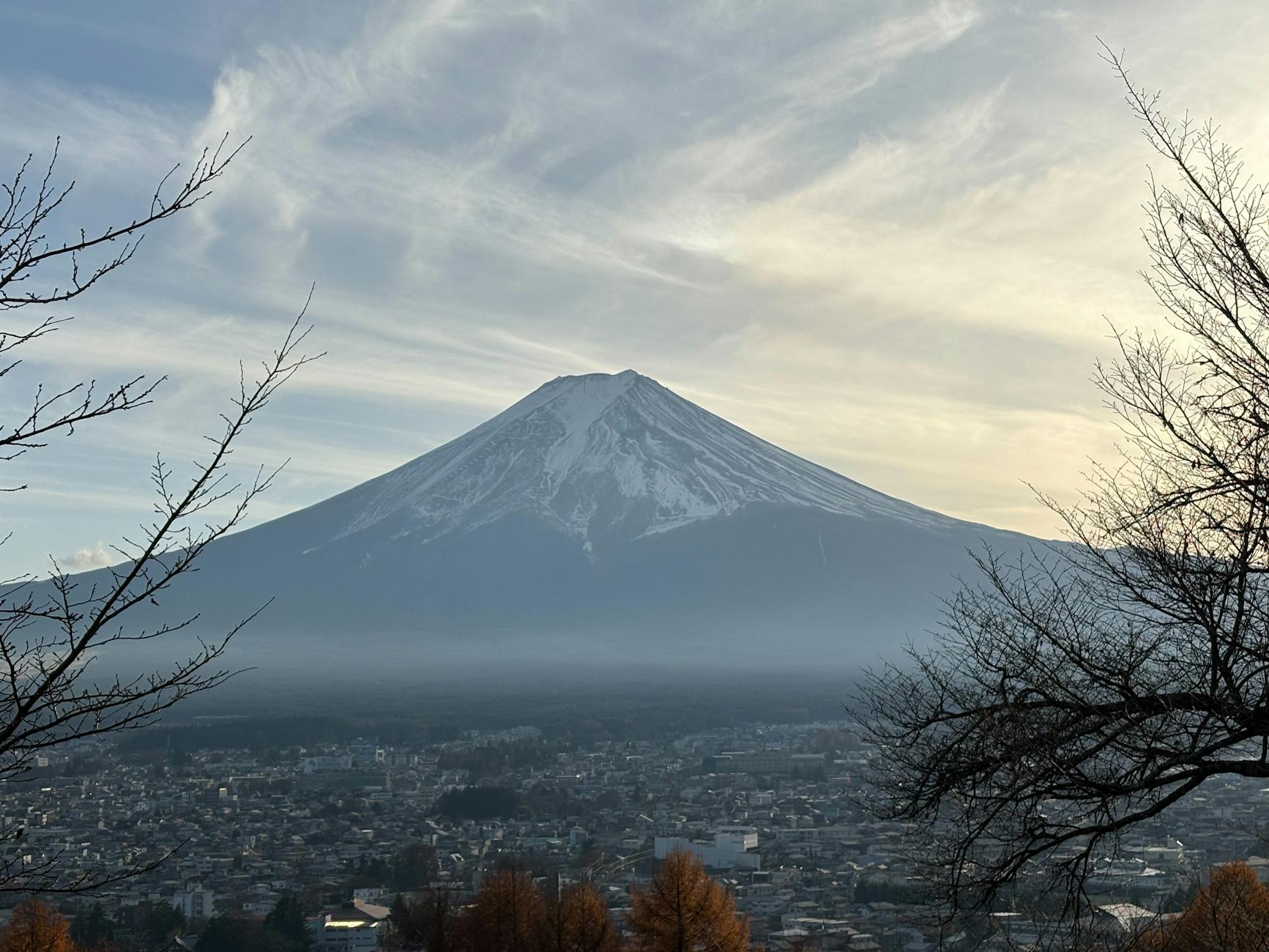
Mount Fuji is Japan’s most iconic landmark, and seeing it for the first time, whether rising above city rooftops on a clear winter morning or reflected perfectly in Lake Kawaguchiko, creates an impression that stays with you long after leaving Japan. The mountain offers several very different visitor experiences, from simply admiring it from ground level to climbing to the summit, and choosing the right approach depends entirely on your goals, fitness level, and time available.
Viewing Mount Fuji Without Climbing
For most visitors, the most rewarding Fuji experience involves viewing the mountain rather than climbing it. The Fuji Five Lakes region, a 90-minute drive or bus ride from Tokyo, provides exceptional views across calm lake surfaces that reflect the mountain on still mornings. Lake Kawaguchiko is the most accessible of the five lakes and the most photographed, with facilities geared toward visitors and regular transport links from Tokyo. Chureito Pagoda in Fujiyoshida, a short hike above the town, provides the quintessential view of the mountain framed by a five-story pagoda that has appeared in countless Japan travel photographs.
Hakone for Mountain Views
Hakone, primarily known as an onsen resort town, also provides excellent Fuji views from multiple vantage points. The Hakone Open Air Museum sits below a ridge that offers views on clear days. The famous red torii gate at Hakone Shrine stands partly in Lake Ashi with Mount Fuji visible behind it on clear days, creating one of the most atmospheric photographs in Japan. The ropeway connecting Owakudani volcanic area to the lake provides aerial views that include the mountain when weather cooperates.
Climbing Mount Fuji
Mount Fuji is an officially designated volcano that is climbable during a designated season running from early July to mid-September. Outside this window, the mountain is covered in snow and ice, making climbing extremely dangerous. The official climbing season aligns with the summer weather window and the operating period of mountain huts, toilets, and rescue services. Four trails lead to the summit from different sides of the mountain, with the Yoshida Trail from the fifth station on the north side being the most popular and well-serviced.
The Fifth Station Starting Point
Almost all climbers begin from the fifth stations located roughly halfway up the mountain rather than from the base, as roads and shuttle buses take you to approximately 2,300 meters elevation before the climbing begins. The Fuji Subaru Line Fifth Station on the Yoshida Trail is the most commonly used starting point, reachable by direct bus from Shinjuku or Kawaguchiko Station during climbing season. Allow one to two hours at the fifth station before beginning your ascent to acclimatize to the altitude and check weather conditions.
Timing Your Climb
Many climbers choose to ascend overnight to reach the summit for sunrise, a phenomenon called goraiko that is considered one of Japan’s great natural spectacles. Starting the climb in the late evening allows you to reach the summit crater by dawn, though this strategy requires adequate cold weather clothing and reliable equipment as temperatures drop sharply near the summit even in summer. Summit temperatures can fall below freezing even in August, and sudden weather changes are common.
Essential Preparation for Climbing
Climbing Mount Fuji requires genuine physical preparation. The round trip from the fifth station takes between 8 and 12 hours for most climbers, covering significant elevation gain and volcanic terrain that becomes increasingly steep and loose near the summit. Altitude sickness is a real risk above 3,000 meters and can affect even physically fit climbers. Essential items include multiple warm layers, waterproof outer clothing, headlamps with spare batteries, sufficient water and snacks, and sturdy hiking footwear. Trekking poles reduce knee strain on the descent, which many climbers find more challenging than the ascent.
Crowds and Etiquette
Mount Fuji attracts several hundred thousand climbers during the official season, resulting in considerable congestion particularly on the Yoshida Trail during peak summer weekends. The mountain management authority has introduced crowd control measures including trail fees and daytime closure of the Yoshida Trail at certain hours to manage overcrowding. Respecting the mountain environment by staying on designated trails, using proper waste disposal facilities, and not removing rocks or volcanic materials is expected from all climbers.
Whether you scale the summit or simply admire the mountain from the lakes below, Mount Fuji delivers a connection to the natural world and Japanese cultural heritage that remains with you permanently. The mountain is sacred in the Japanese consciousness, and approaching it with appropriate respect enhances the experience beyond its considerable visual impact.
Plan Your Japan Trip
Ready to visit Japan? Find and book hotels across Japan — from budget guesthouses to luxury ryokan.
