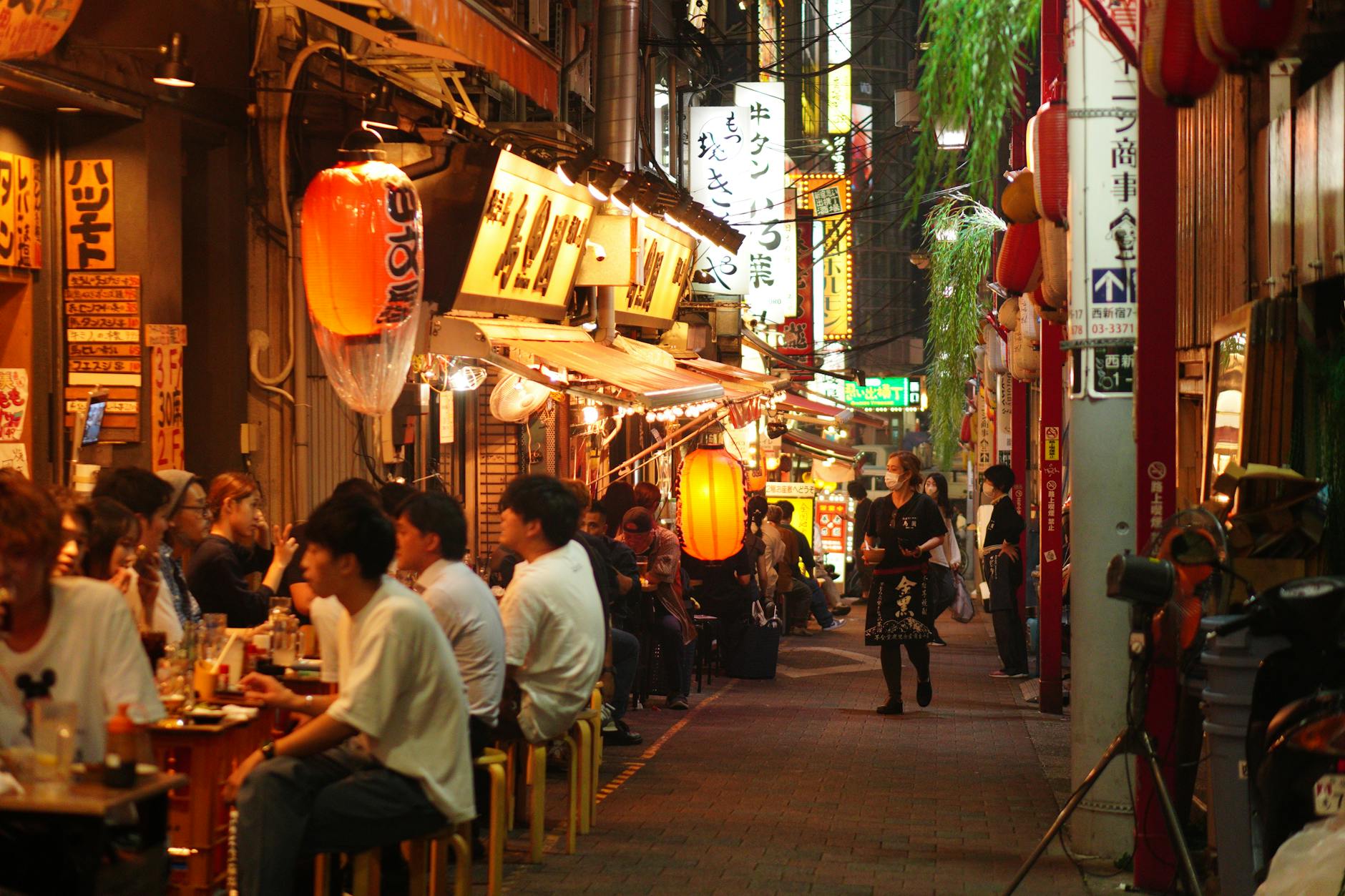
Japanese street food culture extends far beyond the famous festival foods into a rich ecosystem of everyday eating that happens at market stalls, covered shopping arcades, temple fair approaches, and dedicated street food districts throughout the country. Understanding what to look for and where to find it transforms eating in Japan from a series of restaurant visits into a continuous adventure of discovery.
Yakitori Skewers
Yakitori, charcoal-grilled chicken skewers seasoned with either salt or a sweet-savory tare sauce, is one of Japan’s greatest eating pleasures at any price point. Street-level yakitori stands appear near train stations throughout the country, often setting up in the early evening and running until late night. The key to excellent yakitori is the quality of the charcoal smoke and the constant attention required to grill each skewer properly. Beyond chicken thighs and breast, authentic yakitori includes skewers of chicken skin, cartilage, hearts, gizzards, and liver for adventurous eaters.
Taiyaki Fish-Shaped Cakes
Taiyaki are fish-shaped waffles filled with sweet red bean paste, though modern versions now include custard cream, chocolate, and cheese fillings. The fish shape is purely aesthetic and traces back to the original creator’s decision to use a sea bream shape because it was considered auspicious. Fresh taiyaki eaten warm from the iron mold, with the edges still slightly crispy and the filling molten hot, is one of those simple pleasures that stays in memory long after more elaborate meals fade.
Yakisoba Noodles
Yakisoba, wheat noodles stir-fried with pork, cabbage, and vegetables then seasoned with Worcestershire-style sauce, appears at virtually every outdoor festival and market in Japan. The distinctive smell of yakisoba cooking on a large teppan griddle is inseparable from the atmosphere of summer festivals. The noodles are often served in a cardboard tray with a fork or chopsticks and eaten standing or at a temporary table.
Where to Find Street Food in Tokyo
Asakusa’s Nakamise shopping street leads to Senso-ji Temple and is lined with stalls selling traditional Japanese sweets including ningyo-yaki, senbei, and ningyoyaki figurine crackers. Ameyoko Market near Ueno station is a covered market street with vendors selling dried foods, snacks, and fresh produce at competitive prices. Tsukiji Outer Market remains one of the best places in Tokyo for fresh seafood, tamagoyaki egg rolls, and various prepared foods eaten on the spot.
Osaka for Street Food
Osaka’s Dotonbori district concentrates the city’s most famous street foods in a compact area. Beyond takoyaki and okonomiyaki, look for kushikatsu deep-fried skewers in Shinsekai, fresh crab and lobster from tank displays in the seafood restaurants lining the canal, and the extraordinary variety of prepared foods available in the basement food halls of the Takashimaya department store near Namba.
The best strategy for street food exploration in Japan is to eat small portions frequently rather than waiting until hungry and committing to a full meal. This approach allows you to try the maximum number of different things while maintaining both your budget and your appetite throughout the day.
Plan Your Japan Trip
Ready to visit Japan? Find and book hotels across Japan — from budget guesthouses to luxury ryokan.
