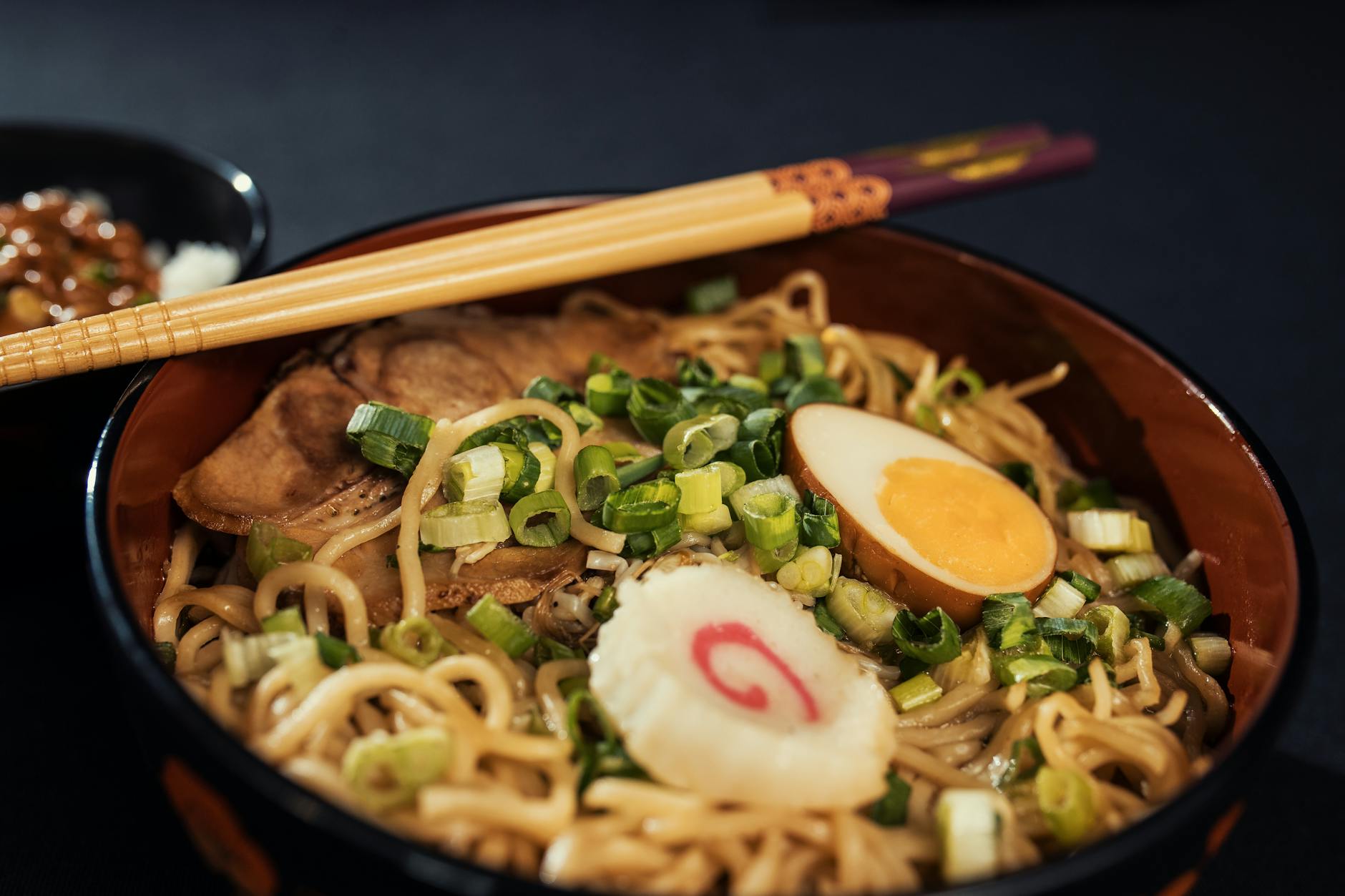
Understanding Ramen Styles
Tokyo’s ramen landscape is dominated by several key styles. Tokyo-style shoyu ramen features a clear, soy-sauce based broth with a distinctive chicken and dashi umami that is lighter than many regional varieties. Tsukemen, the dipping ramen style in which thick noodles are served separately from an intensely concentrated broth for dipping, was essentially invented in Tokyo and remains extremely popular here. Tantanmen, a Japanese adaptation of Sichuan dan dan noodles, has developed its own Tokyo interpretation with rich sesame and mild spice. Rich tonkotsu pork bone broth originally from Fukuoka has also taken firm root in the capital with shops producing excellent local versions.
Shinjuku’s Ramen Street
The area around Shinjuku Station, particularly the streets heading east toward Kabukicho, contains a remarkable concentration of serious ramen shops. Fuunji near Shinjuku is credited by many food enthusiasts as producing one of the finest tsukemen in the city, with its thick, wavy noodles and incredibly complex fish-forward dipping broth. Expect a line most days, particularly at lunchtime, but it moves quickly and the wait is genuinely worth it.
Shibuya and Ebisu Area
Afuri in Ebisu has built a devoted following for its yuzu-shio ramen, a light and fragrant chicken broth infused with yuzu citrus and finished with sea salt rather than soy sauce. The clean, refined flavors offer a contrast to the rich, heavy broths common elsewhere. Multiple locations have opened across Tokyo, though the original Ebisu shop maintains a particular appeal.
Ikebukuro’s Concentrated Scene
Ikebukuro has developed one of the highest concentrations of quality ramen shops anywhere in Tokyo. Taishoken in Higashi-Ikebukuro is the restaurant credited with creating tsukemen as a style, making it a pilgrimage destination for ramen enthusiasts. The original shop has a heritage that draws visitors who want to taste the dish where it was born. Ivan Ramen in nearby locations offers a fascinating perspective from Ivan Orkin, an American chef who became one of Tokyo’s most respected ramen masters.
Ginza and Central Tokyo
Kagari in Ginza produces a remarkable chicken paitan ramen in which the rich, creamy white chicken broth is finished with truffle oil, creating a bowl that straddles the line between ramen shop and upscale restaurant. The shop is tiny with limited seats, requiring patience and persistence to secure entry, but the quality of the result justifies the effort. Seating is first-come, first-served.
Tips for Ordering Ramen
Many Tokyo ramen shops use ticket vending machines at the entrance: purchase your ticket before sitting down, then hand it to the staff when seated. Specify your preferences for noodle firmness and broth richness if prompted, using the terms katame for firm noodles, yawaraka for soft, koku for rich broth, and assari for light broth. Most shops provide a glass of water and sometimes complimentary garlic or green onion condiments on the table. Slurping your noodles is not just acceptable but genuinely encouraged in Japanese ramen culture.
Ramen Museums and Themed Experiences
For a concentrated ramen experience, Shinjuku Takashimaya’s basement food floor and several dedicated ramen complexes around the city bring multiple regional styles together under one roof. The Tokyo Ramen Street inside Tokyo Station’s First Avenue underground mall hosts eight well-regarded shops representing different regional styles, making it an efficient introduction to the breadth of Japanese ramen culture without leaving the station.
The best approach to ramen in Tokyo is to eat it often, try different styles, and follow your own preferences rather than any definitive ranking. The city renews its ramen landscape constantly, with new shops opening and new trends emerging every year. There is always another extraordinary bowl waiting to be discovered.
Plan Your Japan Trip
Ready to visit Japan? Find and book hotels across Japan — from budget guesthouses to luxury ryokan.
Book your trip on Rakuten Travel
How This Guide Was Reviewed
This article was reviewed on July 26, 2026 to reduce generic travel advice and make the page more useful before booking. Prices, opening rules, ticket windows, transport details, and affiliate availability can change, so verify official sources before final plans.
